 Tiny Tank
Agree on water conditions first
List exact species and verified water conditions. Seek suitable shared keeping conditions rather than overlap at short-term tolerance extremes. Assess temperature, minerals, current and oxygen together.
Plan for adult fish and groups
Use swimming length, floor area, height and group size when selecting housing. No universal centimetres-per-litre rule fits every species. Juvenile iridescent sharks, balas and arowanas do not make small tanks appropriate.
Consider mouths and feeding stations
Small fish, shrimplets and eggs can become prey. Peaceful species may still compete for food; verify dedicated bottom feeding and mouth-sized portions. Glass algae alone cannot guarantee adequate nutrition for grazers.
Anticipate breeding changes
Brood-guarding cichlids and nesting fish may defend larger territories. Planted sight breaks need real escape routes. Prepare suitable separation before mixing rather than after a fish is cornered.
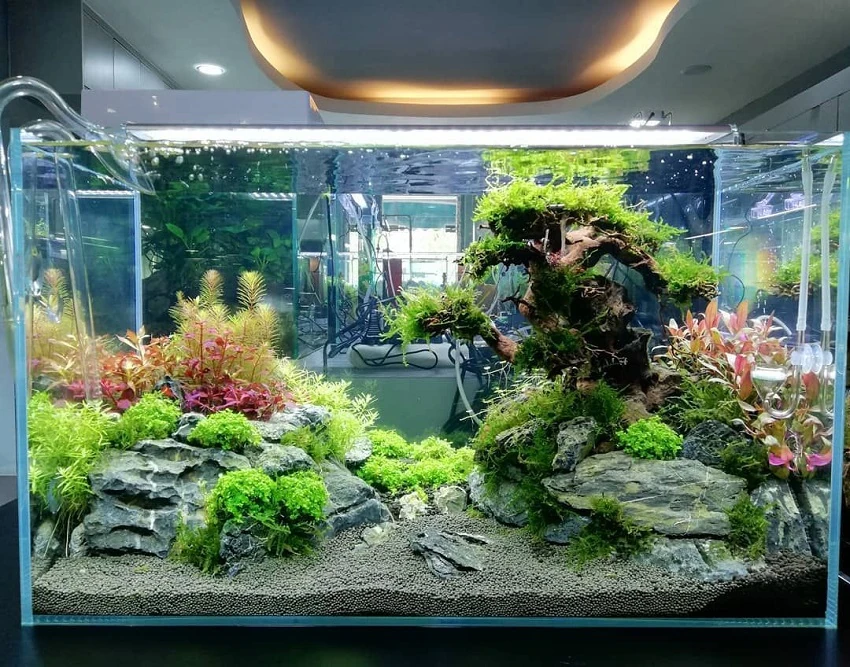
Choose plants for the whole system
A cool flowing tank differs from warm quiet water. Digging or plant-eating fish may damage layouts; attached plants may help placement but cannot fix inadequate space. Wiki links support comparison rather than certify compatibility.
Sources and scope
Practical guidance compiled by TLife. References support water and plant care within their stated topics; consult species-specific articles before applying them.