 Tiny Tank
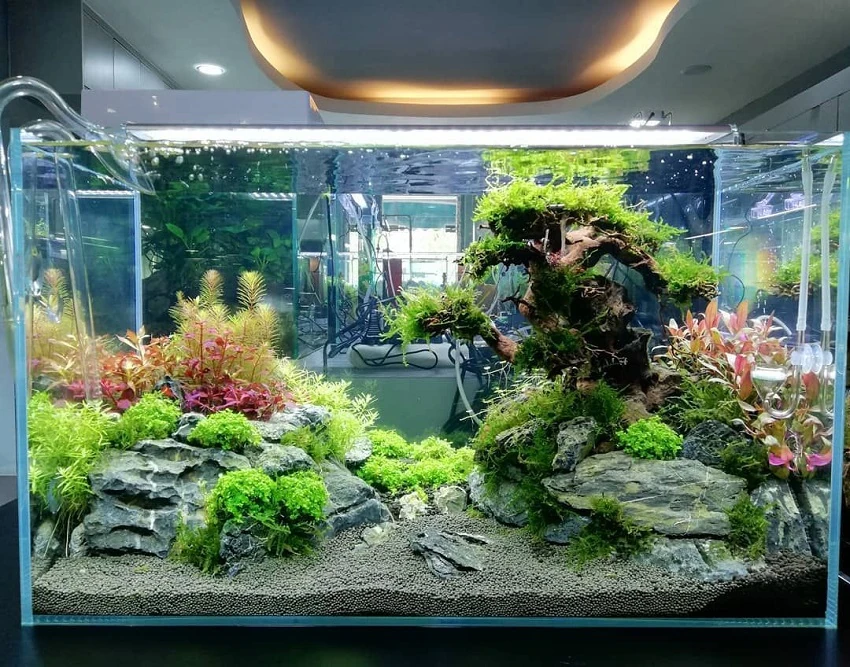
Whenever you observe the tank
Check breathing, visible inhabitants, posture and feeding response. Inspect temperature, running filtration, surface movement and equipment sounds. Remove decaying new-plant leaves rather than allowing them to become waste.
Use readings and a log
Test according to tank stage, stocking and recent changes. New tanks, filter failures and livestock additions need closer observation than stable systems. Record actual values and actions rather than “water good”.
Water changes and debris removal
Set partial changes from load and readings; treat disinfectants and check replacement temperature and minerals. Siphon food traps, wood bases and dense planting without unnecessarily disturbing the entire substrate.
Maintain filtration and growing space
Clean mechanical stages when flow falls according to equipment instructions while preserving biological media. Avoid replacing all media at once. Trim planting in areas, remove clippings and inspect intakes afterwards.
When breathing changes or several animals are affected
Immediately check equipment, temperature, ammonia/nitrite and recent CO₂ or product changes. If CO₂ is suspected, stop its supply and improve gas exchange while investigating. Seek expert help when the cause remains unclear rather than selecting medication from one sign.
Sources and scope
Practical guidance compiled by TLife. References support water and plant care within their stated topics; consult species-specific articles before applying them.