 Tiny Tank
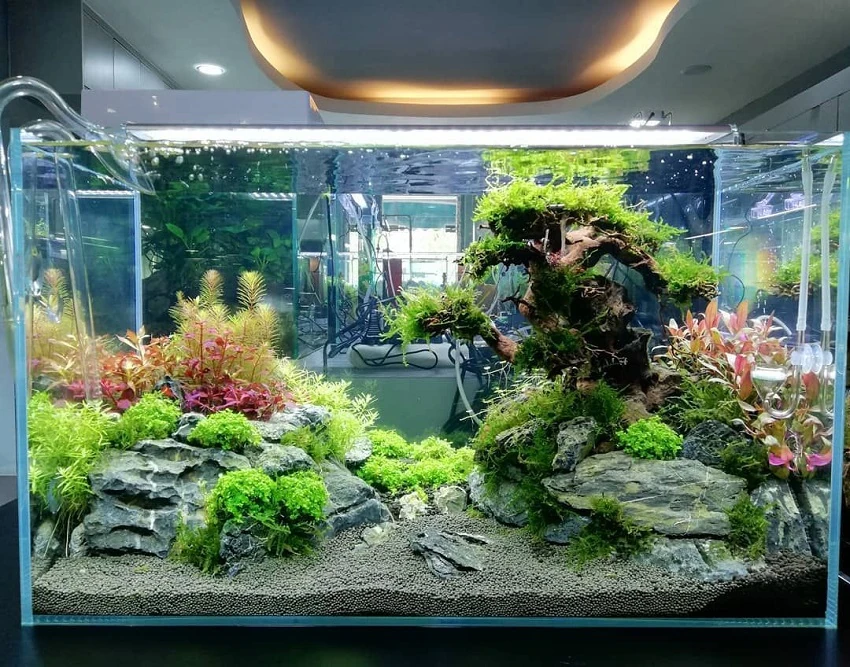
1. Choose livestock before choosing the tank
Check adult size, social needs, water conditions and compatibility for the exact species you plan to buy. A tank for one betta and a community aquarium are different projects. Write down the species you want and use their care requirements to decide which combinations are realistic.
2. Make a setup checklist
Use this as a planning list rather than a universal shopping list. Equipment size and temperature depend on your livestock and tank. Keep space around the layout so routine cleaning and water testing remain practical.
- Choose a tank and secure support suitable for its filled weight.
- Plan biological filtration, water movement, a thermometer and heating where required.
- Prepare water conditioner and tests for ammonia, nitrite, nitrate and pH.
- Choose aquarium-safe substrate and hardscape, then plants suited to your lighting.
- Keep a dedicated bucket and siphon for partial water changes.
3. Understand what cycling does
Fish waste and decaying material produce ammonia. A biological filter supports bacteria that convert ammonia to nitrite and then nitrate. RSPCA explains that a new filter needs time to establish these colonies and that water tests are needed to assess the process. Clear water alone cannot confirm this.
RSPCA recommends fishless cycling before introducing fish. Follow a complete fishless-cycling procedure with your aquarium specialist rather than using live fish to start the filter. Keep a dated record of water tests and ask for help interpreting results before adding livestock.
4. Use water tests, not a calendar, for the next decision
RSPCA describes a completed cycle as ammonia and nitrite at zero with nitrate being produced. Establishment often takes several weeks, but elapsed time by itself is not proof that the filter can support your planned stocking. Review the readings, intended livestock and next steps with an experienced aquarium professional.
5. Keep the planting plan simple
A first layout does not need to include every plant you like. Start with a small selection and learn how it grows in your tank. Our guide compares two plants that attach to hardscape and explains why their rhizomes should remain exposed.
6. Plan maintenance before adding animals
Prepare for partial water changes, water testing and filter care. Avoid replacing all biological media together, since it houses the bacteria the tank relies on. Check the requirements of the animals and the guidance for your equipment before setting a routine.
Try a virtual aquascape alongside your research
Tiny Tank lets you experiment with the look of plants, stones and wood in a virtual aquarium. It is useful for enjoying a layout idea. Its growth times, feeding and stocking limits belong to the simulation; they do not establish whether a real tank is ready for animals.
Sources and scope
Sources checked on 27 November 2026. Layout suggestions are Tiny Tank editorial guidance; the links below support the care and planting information discussed above.