 Tiny Tank
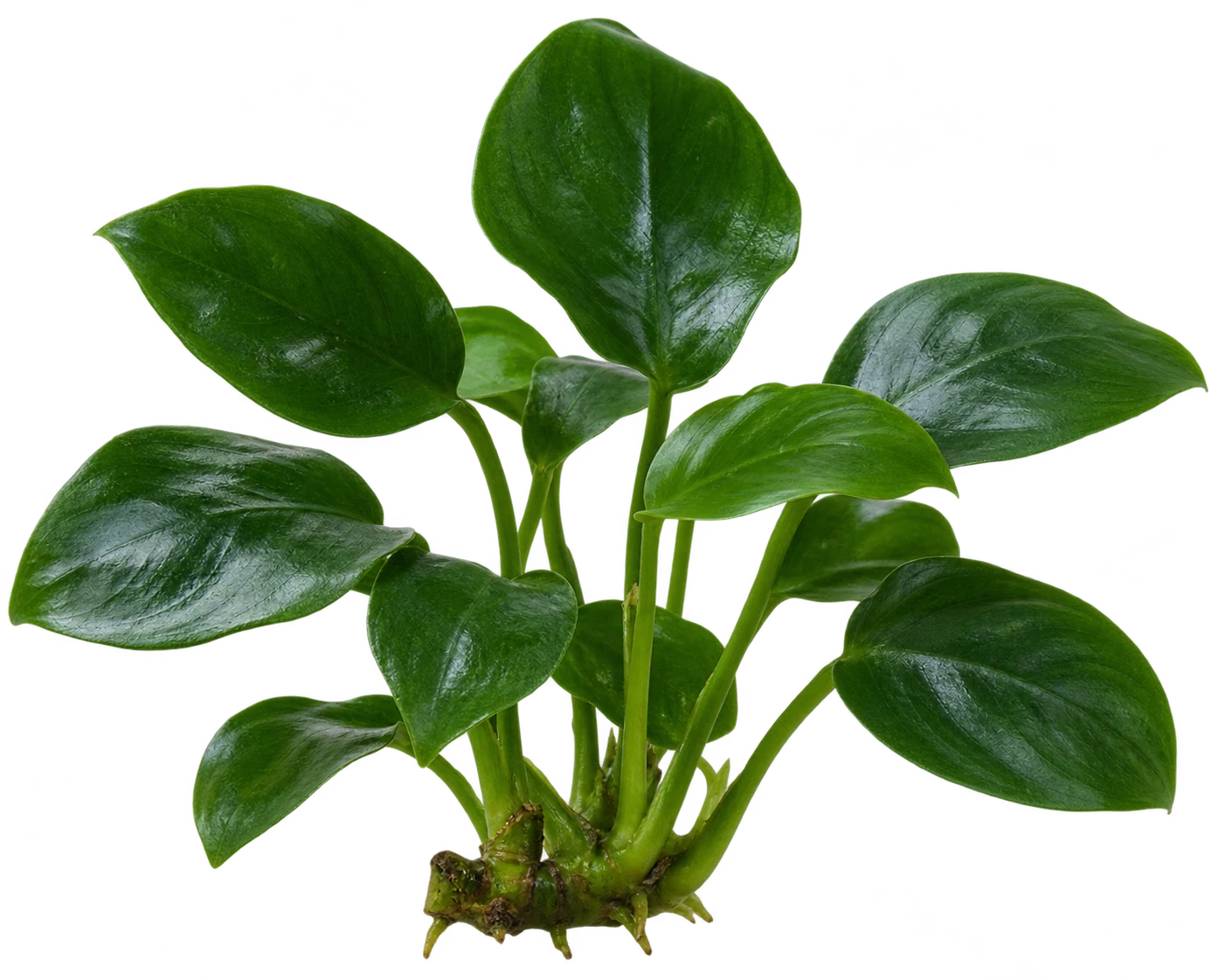
What “without CO2” means
Here it means no injected carbon dioxide. It does not mean plants need no carbon, light or nutrients. Choose plants and lighting as a system: a modest planting plan is easier to assess than buying demanding plants and trying to compensate later. Tropica lists both Anubias nana and Java fern as easy plants with low light and CO2 demands.
Choose the shape before the quantity
Use this comparison to sketch a layout. The positions are editorial layout suggestions; the linked profiles explain the plants’ requirements. Leave room to inspect the attachment points and remove loose leaves.
| Plant | Layout role | How to plant | Full profile |
|---|---|---|---|
| Anubias nana | Compact leaves near a focal stone or root | Attach to wood or rock; expose the rhizome | Anubias nana care |
| Java fern | Taller leaves behind the focal piece | Attach to wood or rock; expose the rhizome | Java fern care |
Attach the plants without burying the rhizome
The rhizome is the thicker horizontal stem from which leaves and roots grow. It is different from the thin roots. Tropica recommends fixing these plants to rock or wood with fishing line until they take hold, and warns that covering the rhizome in the substrate can cause it to rot.
- Place the wood or stone where it can be seen and reached.
- Position the rhizome above the substrate rather than packing gravel around it.
- Secure the plant gently to the hardscape, keeping its leaves free.
- Check the attachment as the plant grows and keep the rhizome exposed.
Know what is normal before changing the setup
Both plants grow slowly. Anubias leaves can persist long enough for algae to establish on them. Java fern can have dark reproductive structures on the underside of its leaves; Tropica distinguishes these from disease. Identify what you are seeing before changing several parts of the tank at once. Keep a photo of the layout so that new growth is easier to compare.
Plants do not replace aquarium cycling
Adding plants is a separate decision from deciding when a tank is ready for fish. Prepare biological filtration and test the water before stocking. Read the cycling guide, then the care profile of each animal you intend to keep.
Sources and scope
Sources checked on 27 November 2026. Layout suggestions are Tiny Tank editorial guidance; the links below support the care and planting information discussed above.