 Nuôi Cá
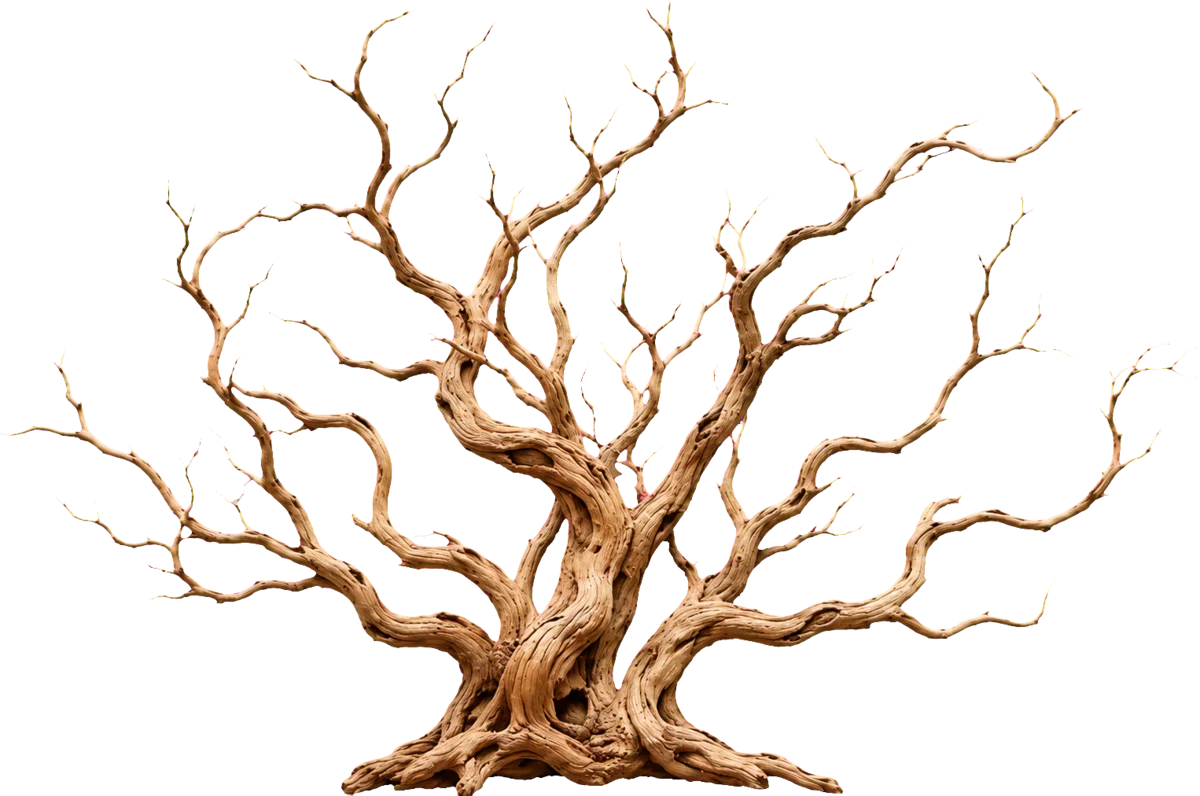
Where Spider wood comes from
Spider wood is a trade name, not a single species. Most of it is said to be the roots and stumps of rhododendron or azalea (genus Rhododendron, heath family Ericaceae) collected in the mountains of China, which is why it is also sold as rhododendron wood; some batches may be roots of other shrubs. The wood is light tan to reddish brown and smooth, with main branches about finger-thick that split into many curving tips. A piece is usually 20–60 cm long and much lighter than heavy trunk driftwood.
Spider wood in an aquascape
New spider wood almost always floats and needs one to several weeks of soaking; boiling speeds it up, or the base can be fixed to a stone or buried under the substrate. It releases a moderate amount of tannin, so the water may turn slightly yellow for a few weeks. It is known for growing a fluffy white fungus within a week or two in the fish tank; this is harmless and either fades on its own or is eaten by shrimp and snails. Thin branches snap easily, so build shapes from several pieces tied or glued together. Use it midground and background for forest layouts and tie moss to the tips. Easy to use.
At a glance
- Material
- Rhododendron root
- Effect on water
- Releases tannins: tints the water, lowers pH slightly
- Place in a layout
- Stones, driftwood and decor
The effect on water is what this material usually does; real stone and wood vary from batch to batch, so soak a piece and test pH and KH before it goes in the tank.
In the Nuôi Cá aquarium
In the arrange tray it sits with the stones, driftwood and decor; at its base size it is about 26 cm tall, and you can scale it, flip it and set it nearer or deeper. Shrimp and snails can climb along its top to graze.
Try it in your aquarium →Sources and further reading
- OATA — freshwater aquarium care sheets (real aquarium care principles)
The "In the Nuôi Cá aquarium" part describes the 3D simulation, not real planting advice.