 Nuôi Cá
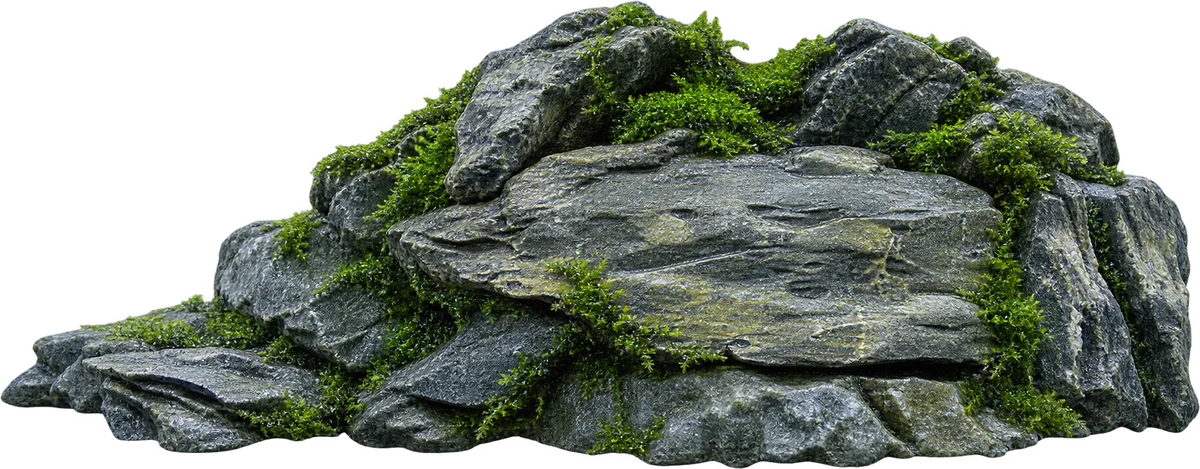
Where Seiryu stone comes from
This is the same trade Seiryu stone: gray limestone with white veins, mostly quarried in China and rarely the Japanese stone the name suggests. Stones from one batch share their color, veining and kind of ridge, so smaller pieces can be picked to match the main group. Seiryu usually has one good face with clear veins and upright ridges and a flatter or broken back, so scapers turn each stone to find its best angle before buying. Sizes range from a few centimeters to boulders of tens of kilograms.
Seiryu stone in an aquascape
A secondary group should be clearly smaller than the main one and set toward the other side of the tank for asymmetric balance, with the gap between often left as a sand path or carpet. Like any limestone it raises KH, GH and pH over time, so change water weekly and test if you keep shrimp or soft-water fish. Low plants such as hairgrass, Monte Carlo or moss soften the base of the stones. Keep the ridges pointing the same way as the main group so the whole scape reads as one rock formation. Stones are heavy: place them before the substrate goes in, or on a plastic grid to protect the bottom glass.
At a glance
- Material
- Limestone
- Effect on water
- Raises hardness and pH
- Place in a layout
- Stones, driftwood and decor
The effect on water is what this material usually does; real stone and wood vary from batch to batch, so soak a piece and test pH and KH before it goes in the tank.
In the Nuôi Cá aquarium
In the arrange tray it sits with the stones, driftwood and decor; at its base size it is about 14 cm tall, and you can scale it, flip it and set it nearer or deeper. Shrimp and snails can climb along its top to graze.
Try it in your aquarium →Sources and further reading
- OATA — freshwater aquarium care sheets (real aquarium care principles)
The "In the Nuôi Cá aquarium" part describes the 3D simulation, not real planting advice.