 Nuôi Cá
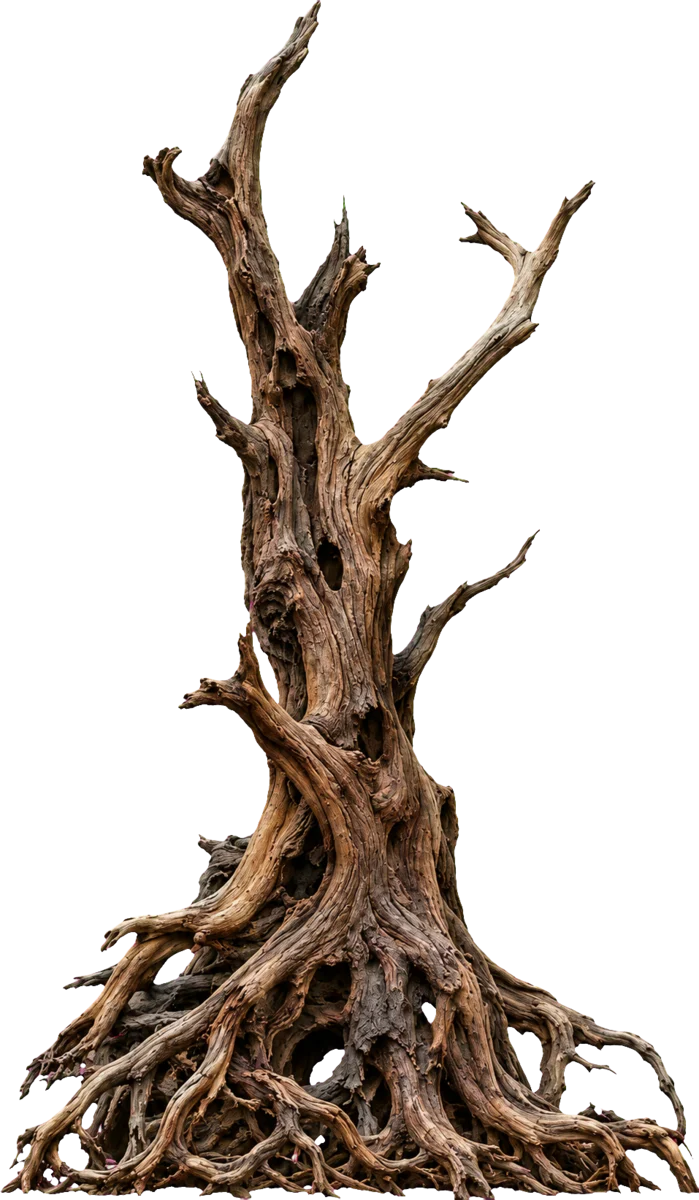
Where Upright root wood comes from
Root wood is the stump and roots of a dead hardwood tree that lay for years in water, mud or damp ground until the soft parts rotted away and only the dense core remained. In the trade the name covers many different woods: rhododendron root, Malaysian driftwood, African mopani or stumps collected from local rivers, so color, hardness and tannin release vary a lot. Set upright, the roots recall riverbank trees in the flooded forests of the Amazon and Southeast Asia, where roots hang into the water and fish shelter between them.
Upright root wood in an aquascape
Most root wood releases tannins that tint the water tea-brown and lower pH slightly, which suits soft-water fish such as bettas and tetras; for clear water, soak or boil it well or run activated carbon. Many pieces float at first and need weeks of soaking or a stone wedged on them. Use it in the background or midground with the roots reaching up, and the gaps give shy fish cover. Anubias, Java fern and moss can be tied to the roots, since they do not need to be planted in the substrate. Check the wood from time to time and scrape away any soft or smelly spots. The early white fungus is harmless.
At a glance
- Material
- Hardwood root stump
- Effect on water
- Releases tannins: tints the water, lowers pH slightly
- Place in a layout
- Stones, driftwood and decor
The effect on water is what this material usually does; real stone and wood vary from batch to batch, so soak a piece and test pH and KH before it goes in the tank.
In the Nuôi Cá aquarium
In the arrange tray it sits with the stones, driftwood and decor; at its base size it is about 31 cm tall, and you can scale it, flip it and set it nearer or deeper. Shrimp and snails can climb along its top to graze.
Try it in your aquarium →Sources and further reading
- OATA — freshwater aquarium care sheets (real aquarium care principles)
The "In the Nuôi Cá aquarium" part describes the 3D simulation, not real planting advice.