 Nuôi Cá
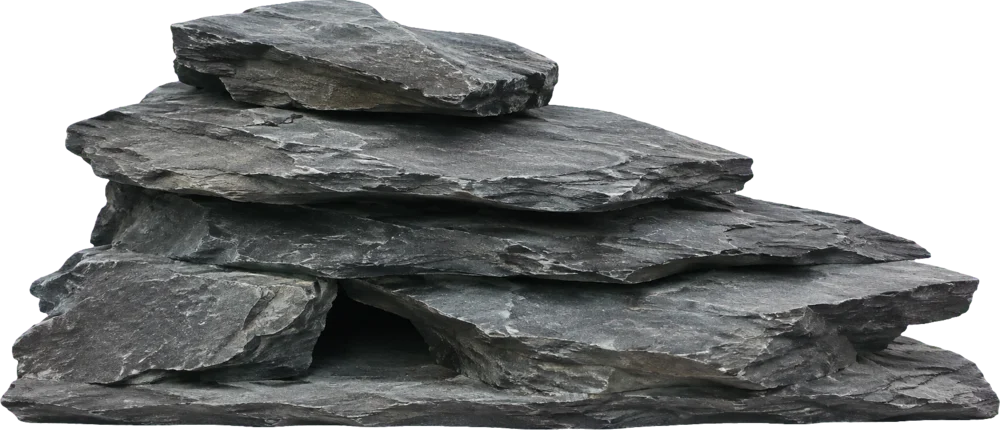
Where Stacked slate comes from
Slate is a fine-grained metamorphic rock formed when shale or volcanic ash is compressed and heated at low grade deep underground. Its minerals line up in parallel, so it splits into flat, thin sheets of gray, charcoal or greenish gray. Slate is quarried in many places for roofing and paving, and aquarium pieces are usually offcuts or broken plates from those quarries. Some carry rusty streaks from iron or pyrite, and some stone sold as "slate" is actually a different rock.
Stacked slate in an aquascape
True slate is usually inert and does not change pH or hardness, but test it with vinegar, since layered limestone is sometimes sold under the same name. Stack the plates offset into terraces or cave roofs and fix them with aquarium-safe silicone or rock glue so they cannot slide. The gaps between layers are perfect spawning and hiding places for dwarf cichlids, gobies and shrimp. Thin edges can be sharp, so file them down. Flat surfaces catch algae under strong light; moss or anubias soften the lines. Easy to use.
At a glance
- Material
- Slate
- Effect on water
- Inert: leaves the water chemistry alone
- Place in a layout
- Stones, driftwood and decor
The effect on water is what this material usually does; real stone and wood vary from batch to batch, so soak a piece and test pH and KH before it goes in the tank.
In the Nuôi Cá aquarium
In the arrange tray it sits with the stones, driftwood and decor; at its base size it is about 24 cm wide, and you can scale it, flip it and set it nearer or deeper. Shrimp and snails can climb along its top to graze.
Try it in your aquarium →Sources and further reading
- OATA — freshwater aquarium care sheets (real aquarium care principles)
The "In the Nuôi Cá aquarium" part describes the 3D simulation, not real planting advice.