 Nuôi Cá
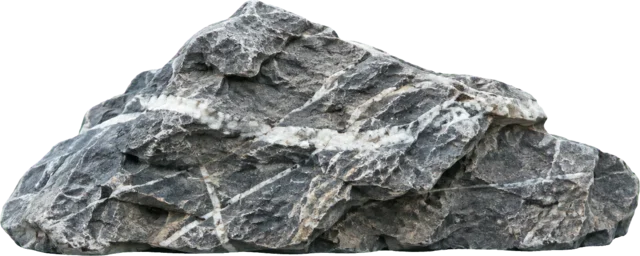
Where Small Seiryu stone comes from
Small Seiryu pieces are under about 10 cm tall, often fragments or small stones from the same batch as the big ones, so color and veining match. They are still gray limestone with white calcite veins quarried in China and sold under the name of a Japanese stone. In nature a large outcrop is always ringed by smaller stones that rolled down and scattered rubble; in Iwagumi the supporting stones (Soeishi) sit close to the big stones and the scattered stones (Suteishi) lie on their own to echo that.
Small Seiryu stone in an aquascape
Scatter a few small stones around the base of the main and secondary stones, buried deeper than the big ones, in odd-numbered groups and never in neat rows. Rubble can also hold sloped substrate in the background in place. Small stones barely change water hardness on their own, but the total amount of limestone in the fish tank decides how much KH, GH and pH rise. Plant carpets such as HC Cuba, hairgrass or moss between them so the rocks look like they rise out of a meadow. Siphon around the stones often, since gaps trap debris. Easy to use.
At a glance
- Material
- Limestone
- Effect on water
- Raises hardness and pH
- Place in a layout
- Stones, driftwood and decor
The effect on water is what this material usually does; real stone and wood vary from batch to batch, so soak a piece and test pH and KH before it goes in the tank.
In the Nuôi Cá aquarium
In the arrange tray it sits with the stones, driftwood and decor; at its base size it is about 6 cm tall, and you can scale it, flip it and set it nearer or deeper. Shrimp and snails can climb along its top to graze.
Try it in your aquarium →Sources and further reading
- OATA — freshwater aquarium care sheets (real aquarium care principles)
The "In the Nuôi Cá aquarium" part describes the 3D simulation, not real planting advice.