 Nuôi Cá
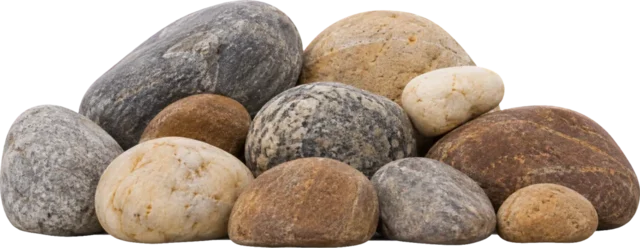
Where River pebbles comes from
River pebbles form when rock broken off upstream is rolled and knocked along by the current over a very long time until the edges wear round. Those sold for aquariums are usually white, yellow or pink quartz and speckled granite, gathered from riverbeds or gravel pits; many come from China or are collected from local streams. Sizes range from a few millimeters to several centimeters, and the color follows the parent rock. This is the bottom of many fast streams, home to hillstream loaches, gobies and freshwater shrimp.
River pebbles in an aquascape
Quartz and granite pebbles are essentially inert and do not change pH or hardness; pebbles collected from a stream can include limestone, though, so test them with vinegar and discard any that fizz. Wash off all mud and sand first. Gravel holds no nutrients, so plants rooted straight into it need root tabs; many scapers spread a layer over aquasoil or make a stream path in the foreground. Pebbles suit river biotopes, fish that like strong flow and species that sift the bottom. Gaps between them trap leftover food, so siphon regularly. Easy to use.
At a glance
- Material
- Quartz, granite
- Effect on water
- Inert: leaves the water chemistry alone
- Place in a layout
- Stones, driftwood and decor
The effect on water is what this material usually does; real stone and wood vary from batch to batch, so soak a piece and test pH and KH before it goes in the tank.
In the Nuôi Cá aquarium
In the arrange tray it sits with the stones, driftwood and decor; at its base size it is about 16 cm wide, and you can scale it, flip it and set it nearer or deeper. Shrimp and snails can climb along its top to graze.
Try it in your aquarium →Sources and further reading
- OATA — freshwater aquarium care sheets (real aquarium care principles)
The "In the Nuôi Cá aquarium" part describes the 3D simulation, not real planting advice.