 Nuôi Cá
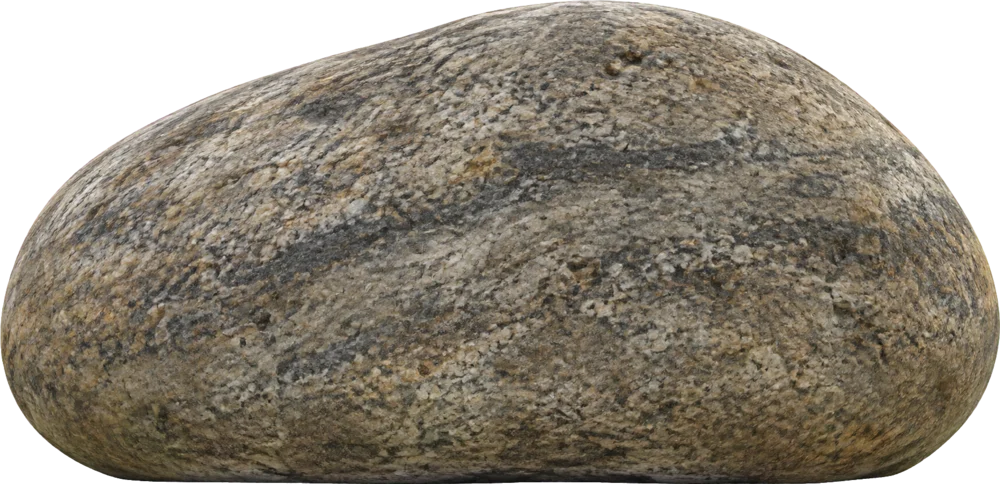
Where River boulder comes from
Granite is an intrusive igneous rock that crystallized slowly underground from quartz, feldspar and mica, which gives it white, pink, gray and black speckles. Once exposed and broken into blocks, it is rolled smooth by rivers over long periods into polished boulders. In nature these lie scattered in clear, fast mountain streams. Aquarium boulders are usually 10 to 30 cm and very dense, far heavier than dragon stone or lava rock of the same size.
River boulder in an aquascape
Granite is inert: it releases no minerals and does not change pH or hardness, so it suits any tank, including soft-water shrimp setups. Because it is so heavy, set it directly on the bottom glass over a protective mat before adding substrate, so digging fish cannot undermine it. Combine it with smaller pebbles, a few branches and plants such as anubias or Java fern tied to the rock for a stream scape. Moss is hard to tie to the smooth surface, but moss and Bucephalandra can creep onto it in time. It suits stream fish like hillstream loaches, gobies and danios that like flow. Easy to use.
At a glance
- Material
- Granite
- Effect on water
- Inert: leaves the water chemistry alone
- Place in a layout
- Stones, driftwood and decor
The effect on water is what this material usually does; real stone and wood vary from batch to batch, so soak a piece and test pH and KH before it goes in the tank.
In the Nuôi Cá aquarium
In the arrange tray it sits with the stones, driftwood and decor; at its base size it is about 20 cm wide, and you can scale it, flip it and set it nearer or deeper. Shrimp and snails can climb along its top to graze.
Try it in your aquarium →Sources and further reading
- OATA — freshwater aquarium care sheets (real aquarium care principles)
The "In the Nuôi Cá aquarium" part describes the 3D simulation, not real planting advice.