 Nuôi Cá
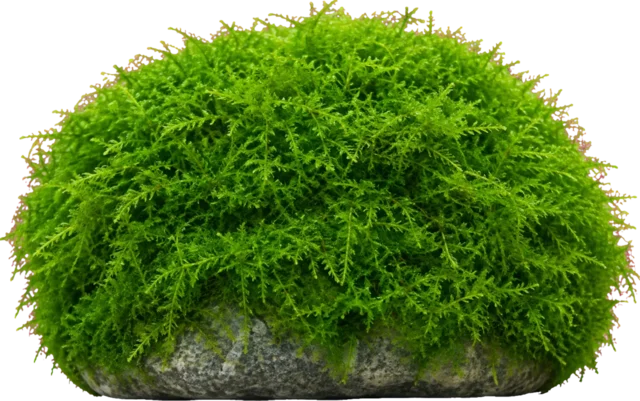
Where Moss-covered stone comes from
Weeping moss is usually identified as Vesicularia ferriei, a moss in the family Hypnaceae native to China and East Asia, where it grows on damp stream banks and wet rocks. It is named for its drooping branches that hang like a willow, especially when tied up high. The stone underneath is usually a common scaping rock such as dragon stone, lava rock or a river pebble with a rough surface for the moss to grip. Moss has no true roots, only fine rhizoids, so it must first be tied on with cotton thread or fishing line, or glued.
Moss-covered stone in an aquascape
Weeping moss needs low to medium light and grows slowly; CO2 and liquid fertilizer make it denser and greener but are not required, and it prefers cooler water around 20–26 °C to a very warm tank. Tie a thin, even layer over the stone and it attaches within about a month. Trim often so it does not grow too thick, because shaded lower layers turn brown and rot, and siphon the clippings. Moss traps debris and hair algae, so give it gentle flow and a few shrimp to keep it clean. The stone itself may affect the water depending on the type: limestone raises hardness, while the rocks above are close to inert. Easy.
At a glance
- Material
- Stone, weeping moss
- Effect on water
- Inert: leaves the water chemistry alone
- Place in a layout
- Stones, driftwood and decor
The effect on water is what this material usually does; real stone and wood vary from batch to batch, so soak a piece and test pH and KH before it goes in the tank.
In the Nuôi Cá aquarium
In the arrange tray it sits with the stones, driftwood and decor; at its base size it is about 13 cm wide, and you can scale it, flip it and set it nearer or deeper. Shrimp and snails can climb along its top to graze.
Try it in your aquarium →Sources and further reading
- OATA — freshwater aquarium care sheets (real aquarium care principles)
The "In the Nuôi Cá aquarium" part describes the 3D simulation, not real planting advice.