 Nuôi Cá
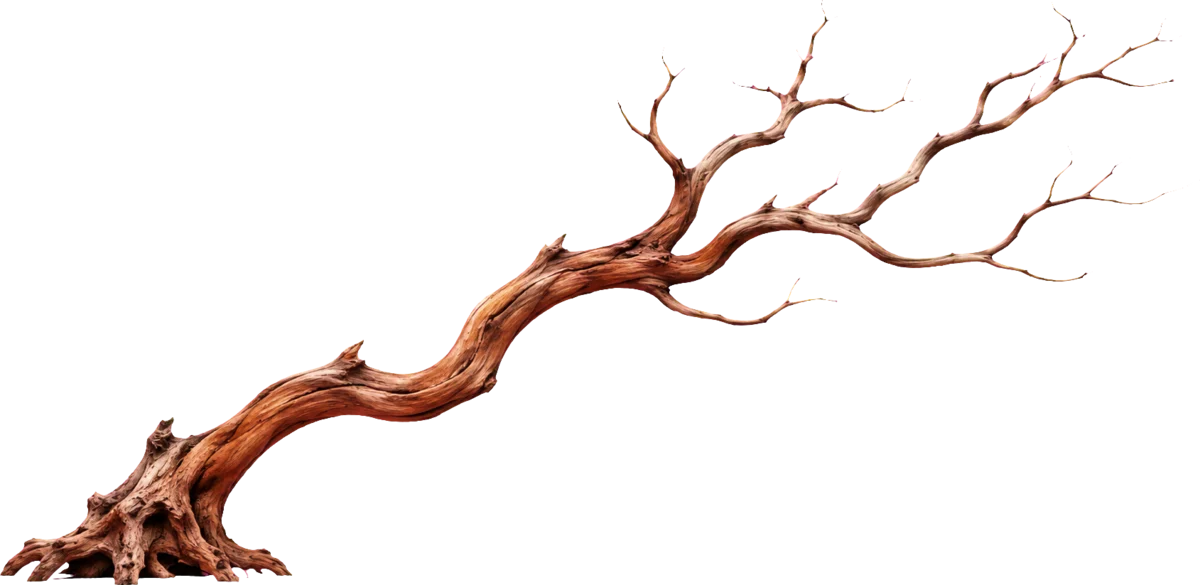
Where Leaning driftwood comes from
In tropical forest streams, trees on the bank often lean or fall into the water after a landslide or storm, and the half-submerged branches become shelter for fish and a surface for algae and moss. Leaning branches sold for aquariums are dried, debarked hardwood, often rhododendron, manzanita or river driftwood; the name describes how it is placed, not a kind of wood. Pieces are usually 30–60 cm long with a few side branches near the tip.
Leaning driftwood in an aquascape
Set the base in a back corner or under a stone and let the tip rise diagonally toward the surface, or even break it, to make the scape feel larger than the glass. Wedging the base under rock keeps the branch from sliding or floating. The wood releases tannins that yellow the water and lower pH slightly, so soak it first. Moss, anubias or Java fern can be tied along it, and the tip near the surface gets more light, so moss grows faster there. The diagonal suits triangular and concave layouts. Wood that sticks out of the water can grow mold above the surface. Easy to use.
At a glance
- Material
- Hardwood driftwood
- Effect on water
- Releases tannins: tints the water, lowers pH slightly
- Place in a layout
- Stones, driftwood and decor
The effect on water is what this material usually does; real stone and wood vary from batch to batch, so soak a piece and test pH and KH before it goes in the tank.
In the Nuôi Cá aquarium
In the arrange tray it sits with the stones, driftwood and decor; at its base size it is about 46 cm wide, and you can scale it, flip it and set it nearer or deeper. Shrimp and snails can climb along its top to graze.
Try it in your aquarium →Sources and further reading
- OATA — freshwater aquarium care sheets (real aquarium care principles)
The "In the Nuôi Cá aquarium" part describes the 3D simulation, not real planting advice.