 Nuôi Cá
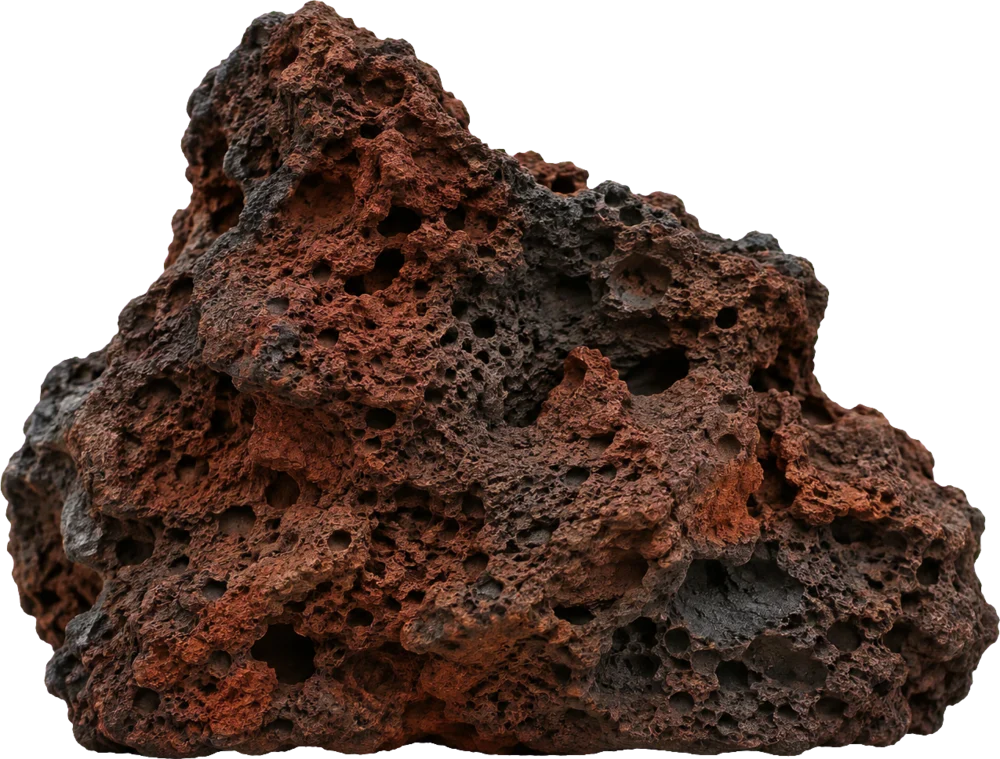
Where Lava rock comes from
Aquarium lava rock is usually porous basalt (scoria): basaltic lava that cooled quickly at the surface while escaping gas left countless small cavities. It is black, charcoal or reddish brown depending on how much of its iron has oxidized, with a rough, sharp surface. Thanks to its pores it is much lighter than dense stone of the same size, so even large pieces are easy to handle and stack.
Lava rock in an aquascape
Lava rock is essentially inert and does not raise hardness; red rock may contain iron but nothing of concern. Its rough, porous surface is ideal for beneficial bacteria, and the roots of anubias, Java fern and moss grip it quickly, while shrimp forage in the holes. Soak and scrub off the dust; very porous pieces may float until waterlogged. Sharp edges can tear long fins or scrape bottom-dwelling catfish, so place it with care. The pores trap debris and need rinsing during cleaning. Easy to use.
At a glance
- Material
- Porous basalt
- Effect on water
- Inert: leaves the water chemistry alone
- Place in a layout
- Stones, driftwood and decor
The effect on water is what this material usually does; real stone and wood vary from batch to batch, so soak a piece and test pH and KH before it goes in the tank.
In the Nuôi Cá aquarium
In the arrange tray it sits with the stones, driftwood and decor; at its base size it is about 12 cm tall, and you can scale it, flip it and set it nearer or deeper. Shrimp and snails can climb along its top to graze.
Try it in your aquarium →Sources and further reading
- OATA — freshwater aquarium care sheets (real aquarium care principles)
The "In the Nuôi Cá aquarium" part describes the 3D simulation, not real planting advice.