 Nuôi Cá
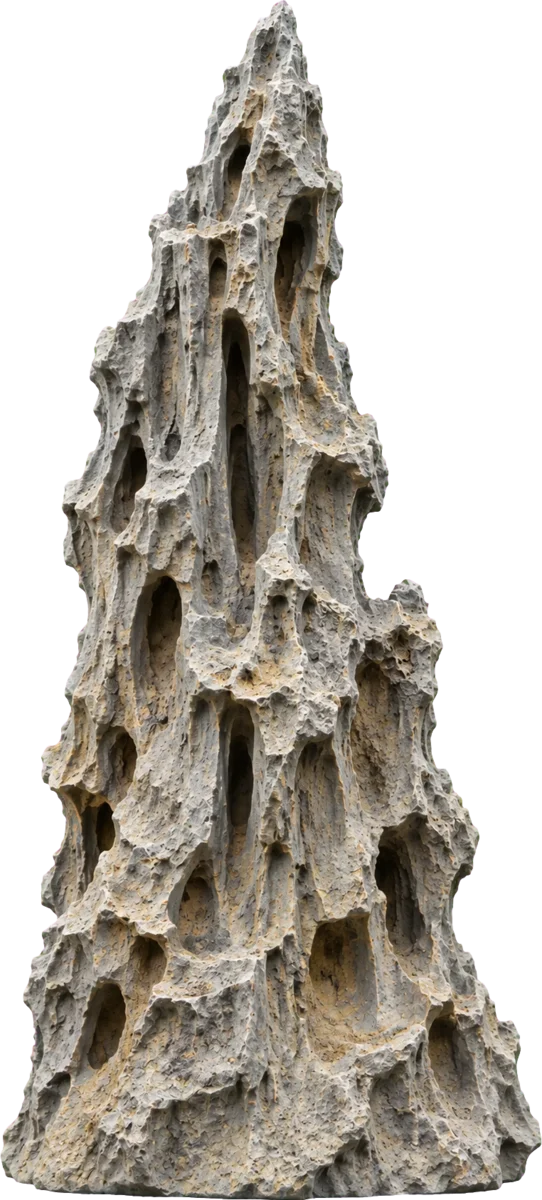
Where Karst pillar comes from
Karst is landscape formed when slightly acidic rain dissolves limestone over millions of years, carving caves, pockets and grooves and leaving upright towers such as those of Ha Long Bay, Ninh Binh, Ha Giang and Guilin in China. Aquarium karst pieces are weathered limestone of a similar shape, usually from China, such as Ying stone or similar ornamental stones; the trade names are inconsistent. The rock is gray to near black with folds and vertical grain. Never take stone from protected scenic areas.
Karst pillar in an aquascape
Being limestone, a karst pillar raises KH, GH and pH, especially when the block is large and the tank small; a drop of vinegar fizzes on it. It suits hard-water fish such as Tanganyikan cichlids, mollies and guppies, and fits poorly with Caridina shrimp or fish that need very soft water. Rinse the soil out of the pockets before use. Stand the pillar in the background or as the main stone, bury the base deep and group a few of different heights to suggest a range of peaks. The pockets hold moss, small anubias or Bucephalandra; plants at the base need medium light. Easy to use, as long as its effect on the water is planned for.
At a glance
- Material
- Weathered limestone
- Effect on water
- Raises hardness and pH
- Place in a layout
- Stones, driftwood and decor
The effect on water is what this material usually does; real stone and wood vary from batch to batch, so soak a piece and test pH and KH before it goes in the tank.
In the Nuôi Cá aquarium
In the arrange tray it sits with the stones, driftwood and decor; at its base size it is about 32 cm tall, and you can scale it, flip it and set it nearer or deeper. Shrimp and snails can climb along its top to graze.
Try it in your aquarium →Sources and further reading
- OATA — freshwater aquarium care sheets (real aquarium care principles)
The "In the Nuôi Cá aquarium" part describes the 3D simulation, not real planting advice.