 Nuôi Cá
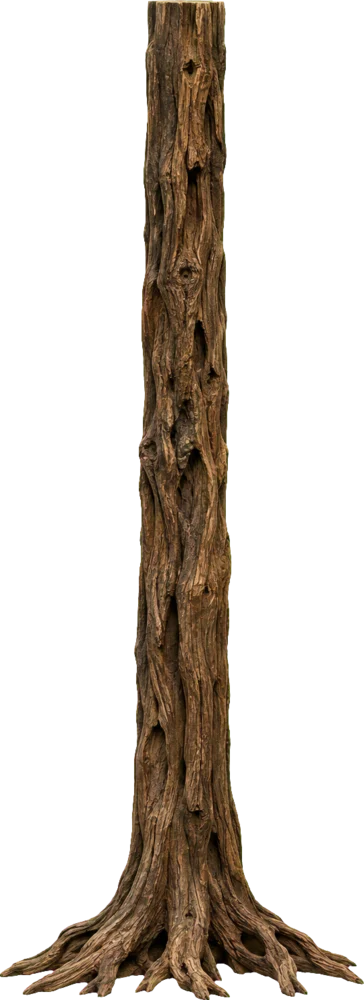
Where Forest trunk comes from
Straight trunk wood is usually the branches or thin trunks of dried, debarked hardwood, such as rhododendron, manzanita, shrub roots or branches collected from rivers; the name describes the shape, not a species. Scapers pick straight, sparsely branched pieces about 1–4 cm thick and 20–60 cm long. The idea comes from real woodland, where straight trunks stand among one another and light falls through the canopy to create depth.
Forest trunk in an aquascape
Stand the trunks in the background and midground, fixed to a stone, screwed to a base or buried deep in the substrate, and group several at different heights and spacings, thicker ones in front and thinner behind, for forced perspective. The wood leaches tannins, so the water may turn slightly yellow for a few weeks, and it may float until soaked. Tie moss at the tops for a canopy, plant stem plants behind and a carpet at the base. Upright wood is easily knocked over by large fish or during water changes, so glue or tie the trunks together with fishing line. Easy to use.
At a glance
- Material
- Hardwood driftwood
- Effect on water
- Releases tannins: tints the water, lowers pH slightly
- Place in a layout
- Stones, driftwood and decor
The effect on water is what this material usually does; real stone and wood vary from batch to batch, so soak a piece and test pH and KH before it goes in the tank.
In the Nuôi Cá aquarium
In the arrange tray it sits with the stones, driftwood and decor; at its base size it is about 37 cm tall, and you can scale it, flip it and set it nearer or deeper. Shrimp and snails can climb along its top to graze.
Try it in your aquarium →Sources and further reading
- OATA — freshwater aquarium care sheets (real aquarium care principles)
The "In the Nuôi Cá aquarium" part describes the 3D simulation, not real planting advice.