 Nuôi Cá
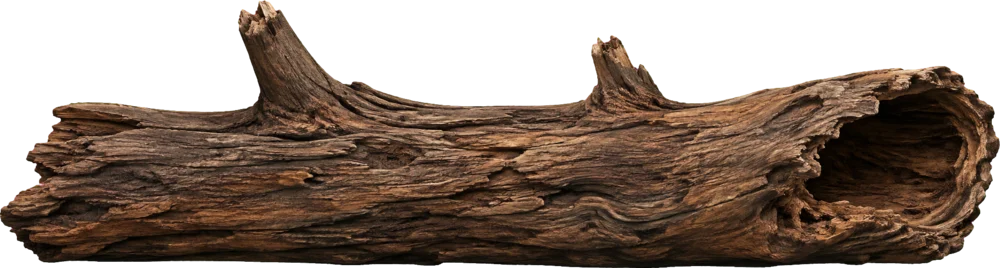
Where Fallen log comes from
In the wild, trees that fall into tropical forest streams lose their soft cores to fungi and microbes, leaving hollow tubes that catfish, loaches and dwarf cichlids use as homes. Hollow logs sold for aquariums are hardwood that lay for a long time in water or mud, with the rotten parts cleaned out so only solid wood is left; some are cut trunks drilled hollow. The species of wood is usually unknown, and common sizes are 20–50 cm long and a few to more than ten centimeters across.
Fallen log in an aquascape
The wood releases tannins that yellow the water and slightly lower pH, so soak or boil it first and use activated carbon if you want clear water. Never use soft, rotting wood picked up outdoors, as it keeps decaying and fouls the tank; good wood is hard and does not give when squeezed. Lay it in the foreground or midground with the opening facing forward so you can see fish come and go. Plecos, loaches and shrimp love to hide inside, and plecos rasp the surface. Debris builds up in the tube, so rinse it now and then. Moss and anubias can be tied along the top. Easy to use.
At a glance
- Material
- Hollow hardwood log
- Effect on water
- Releases tannins: tints the water, lowers pH slightly
- Place in a layout
- Stones, driftwood and decor
The effect on water is what this material usually does; real stone and wood vary from batch to batch, so soak a piece and test pH and KH before it goes in the tank.
In the Nuôi Cá aquarium
In the arrange tray it sits with the stones, driftwood and decor; at its base size it is about 35 cm wide, and you can scale it, flip it and set it nearer or deeper. Shrimp and snails can climb along its top to graze.
Try it in your aquarium →Sources and further reading
- OATA — freshwater aquarium care sheets (real aquarium care principles)
The "In the Nuôi Cá aquarium" part describes the 3D simulation, not real planting advice.