 Nuôi Cá
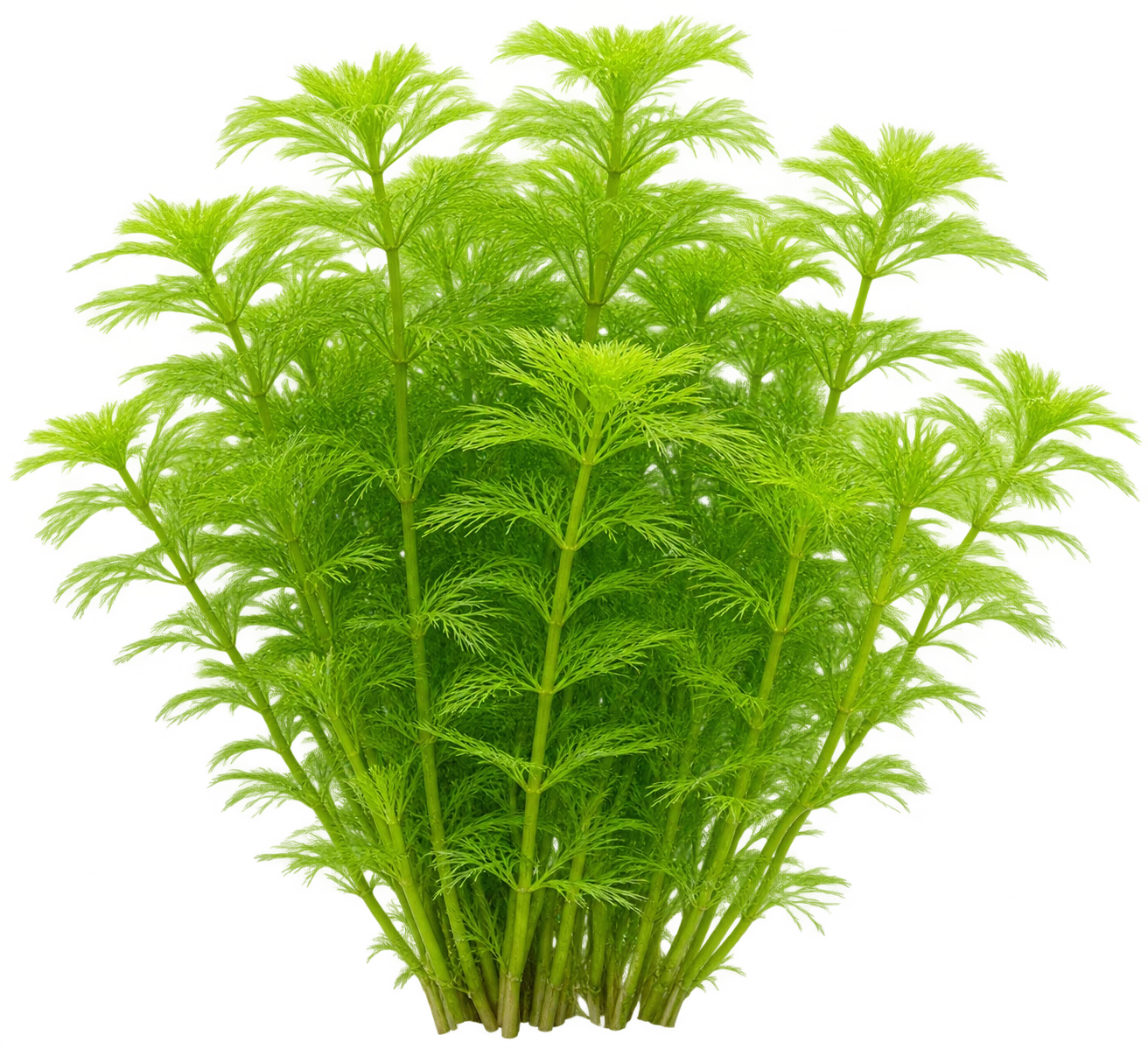
Where Ambulia comes from
Limnophila sessiliflora belongs to the plantain family (Plantaginaceae) and is native to tropical and subtropical Asia, from India and Sri Lanka through Southeast Asia and China to Japan, where it grows in rice fields, ponds and still ditches. Its leaves are split into many fine, needle-like segments arranged in whorls of 8–12 around the stem; the soft stems can exceed 50 cm, and tips that reach the air grow stiffer leaves and small pale violet flowers. It is a relative of the rice paddy herb L. aromatica. Asian marshweed is listed as a noxious, invasive weed in the southern United States, so never release plants or tank water into the wild.
Growing Ambulia in a planted aquarium
In a planted aquarium it grows in medium light and does not need CO2, though CO2 makes it denser and straighter. It grows very fast, which makes it useful in the background of a new fish tank to outcompete algae for nutrients. How to grow it: plant single stems in the substrate or let them float for a while. Trim often, replanting the tops and discarding bare lower stems; otherwise it spreads across the surface and shades everything below. Weak light gives sparse, leggy stems, and the fine leaves trap debris, so good filtration keeps it clean. It is easy and well suited to beginners.
At a glance
- Scientific name
- Limnophila sessiliflora
- Light
- Medium
- CO2
- Helpful
- Growth
- Fast
- Difficulty
- Easy
- Place in a layout
- Background plants
Light, CO2 and growth are typical levels; the same plant can grow differently with each tank's light, substrate and water.
In the Nuôi Cá aquarium
In the arrange tray it sits with the background plants; at its base size it is about 31 cm tall, and you can scale it, flip it and set it nearer or deeper. Its leaves sway in the current from the filter and wave maker. Under the tank light it pearls small oxygen bubbles.
Try it in your aquarium →Sources and further reading
- GBIF — Limnophila sessiliflora (scientific name, taxonomy and native range)
- OATA — freshwater aquarium care sheets (real aquarium care principles)
The "In the Nuôi Cá aquarium" part describes the 3D simulation, not real planting advice.