 Nuôi Cá
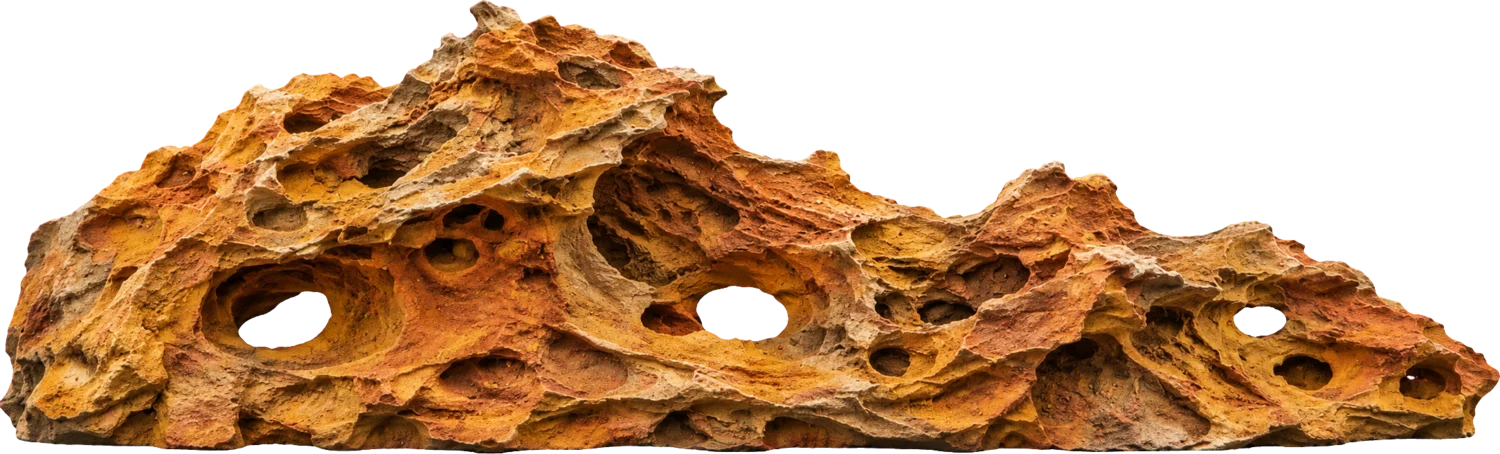
Where Flat Ohko stone comes from
This is the same Ohko stone, a trade name for the porous yellow-brown rock from China usually described as hardened clay or a sedimentary breccia, though its exact nature is debated. Flat pieces form where the rock broke along layers or weathered sideways, so they have a fairly flat top and lumpy sides. Because it is lighter than dense stone of the same size, pieces 20–40 cm long are still easy to handle. Color and porosity vary between batches, so pick stones from one lot for a uniform look.
Flat Ohko stone in an aquascape
Use flat stones in the foreground and midground, staggered into terraces that hold the substrate sloping up toward the back. The flat tops take moss or a small carpet, and the holes hold Bucephalandra, small anubias or ferns. The stone is close to inert and does not noticeably raise hardness. Rinse the clay out of the holes first, or silt clouds the water and settles on leaves. Gaps between stone and glass trap debris, so leave room to clean. The rock is brittle, so avoid knocking pieces together while scaping. Easy to use.
At a glance
- Material
- Hardened claystone
- Effect on water
- Inert: leaves the water chemistry alone
- Place in a layout
- Stones, driftwood and decor
The effect on water is what this material usually does; real stone and wood vary from batch to batch, so soak a piece and test pH and KH before it goes in the tank.
In the Nuôi Cá aquarium
In the arrange tray it sits with the stones, driftwood and decor; at its base size it is about 9 cm tall, and you can scale it, flip it and set it nearer or deeper. Shrimp and snails can climb along its top to graze.
Try it in your aquarium →Sources and further reading
- OATA — freshwater aquarium care sheets (real aquarium care principles)
The "In the Nuôi Cá aquarium" part describes the 3D simulation, not real planting advice.