 Nuôi Cá
Where Aponogeton ulvaceus comes from
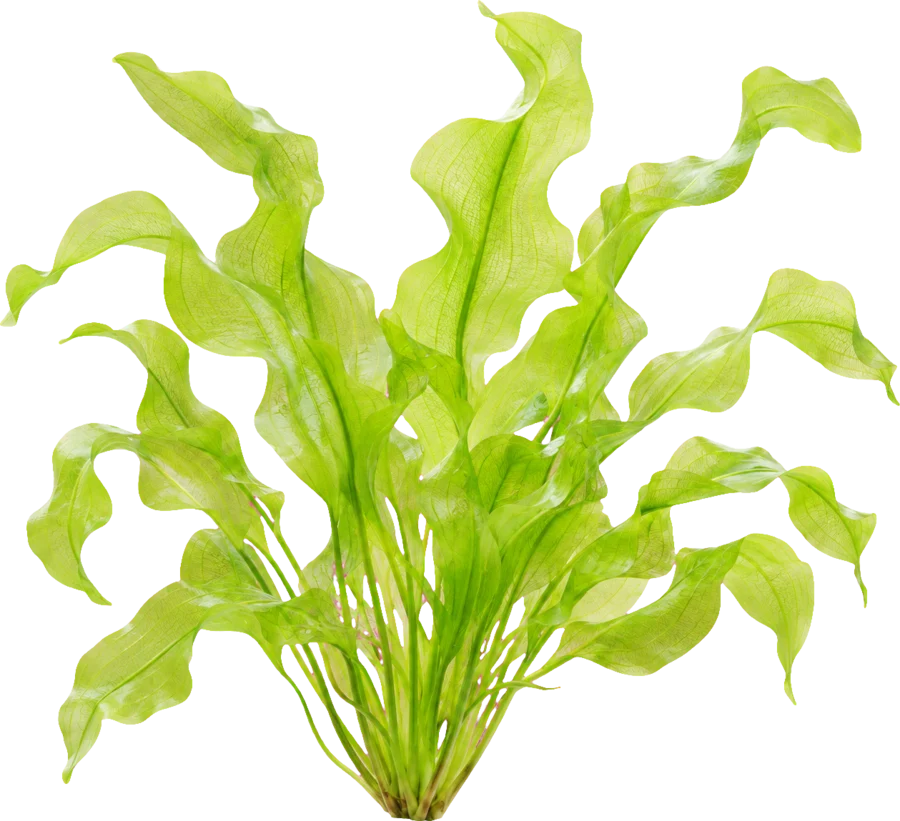
Aponogeton ulvaceus belongs to the cape-pondweed family (Aponogetonaceae) and is endemic to Madagascar, where it grows in streams and rivers with slow to moderate current. It sprouts from a rounded tuber at the base; the leaves are 30–50 cm long and about 4–8 cm wide, light green, thin and nearly translucent, wavy and gently twisted like a ribbon, and a full plant can spread 40–60 cm. It flowers on stalks that reach the surface, with yellow or white spikes often split in two, and can self-pollinate to set seed. In the wild it rests in the dry season.
Growing Aponogeton ulvaceus in a planted aquarium
In a planted aquarium Aponogeton ulvaceus does well in medium light; CO2 is not essential but improves the leaves. It grows fast and large, so it suits a focal point in the background of tanks about 60 cm and up. How to grow it: lay the bulb on the substrate or bury it shallowly, leaving the growing tip exposed so it does not rot; it is a heavy root feeder, so use a rich substrate or root tabs. After several months to a year it may go dormant and its leaves die back; leave the bulb in place, or give it a cooler rest, and it will regrow. Remove old leaves at the base. Care is generally easy.
At a glance
- Scientific name
- Aponogeton ulvaceus
- Light
- Medium
- CO2
- Helpful
- Growth
- Fast
- Difficulty
- Easy
- Place in a layout
- Background plants
Light, CO2 and growth are typical levels; the same plant can grow differently with each tank's light, substrate and water.
In the Nuôi Cá aquarium
In the arrange tray it sits with the background plants; at its base size it is about 23 cm tall, and you can scale it, flip it and set it nearer or deeper. Its leaves sway in the current from the filter and wave maker. It opens in the tray on day 7 of your visits.
Try it in your aquarium →Sources and further reading
- GBIF — Aponogeton ulvaceus (scientific name, taxonomy and native range)
- OATA — freshwater aquarium care sheets (real aquarium care principles)
The "In the Nuôi Cá aquarium" part describes the 3D simulation, not real planting advice.