 Nuôi Cá
Aquarium layouts and setup guides
Explore 52 aquarium layouts with reference images, plants, hardscape, equipment, arrangement and maintenance.
Choose a layout for assembly guidance, component roles and real-aquarium checks.
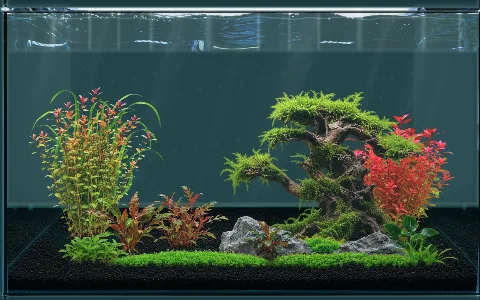 Bonsai treeConcentrate the bonsai canopy on the right, lower planting around its base and preserve left-side swimming space. Trim moss by canopy rather than hiding every branch.
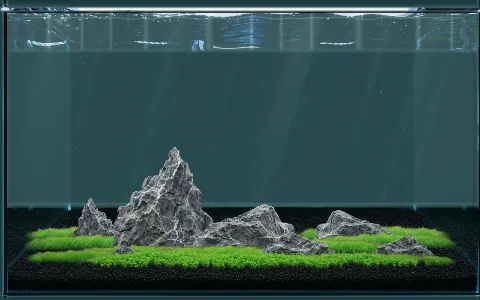 Seiryu IwagumiSet the main stone off-centre, align supporting stone grain and wrap low carpeting around the bases. Preserve gaps so the group does not become a wall.
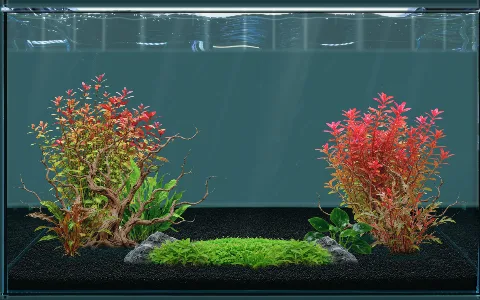 Concave valleyRaise planted wood at both edges and lower the central valley. Keep the central sight line open after growth, not just on planting day.
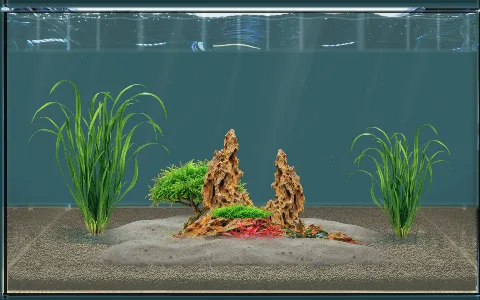 Central islandCluster rocks and planting into an island with sand around its foot. Contain spreading plants before they erase the island/sand boundary.
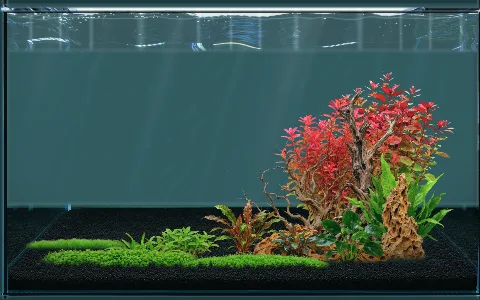 Triangle layoutBuild height on the right and taper leftward. Keep basal planting low so the diagonal survives trimming and regrowth.
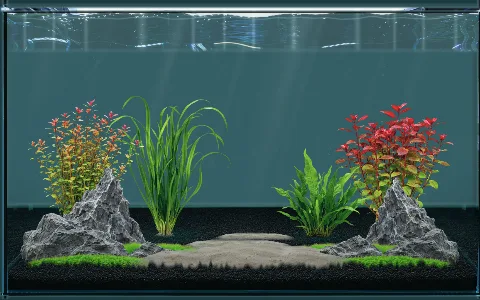 Sand riverLead a broad front sand channel into a narrower rear opening, with rock and plants as banks. Siphon gently to avoid mixing planted substrate into the channel.
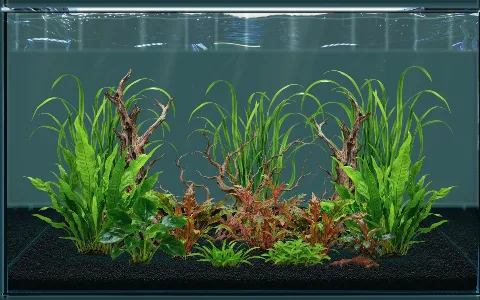 JungleLayer roots and long leaves while retaining windows into the interior. Thin selectively so density does not block circulation or cleaning.
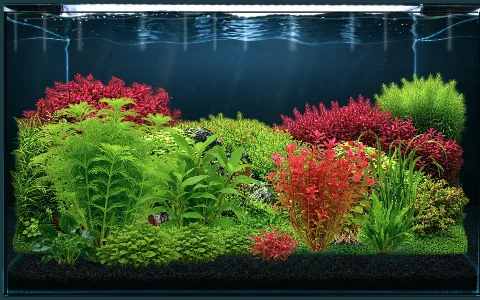 Dutch tankSeparate contrasting leaf forms and colours into groups, with a low plant street leading back. The illustrated plant-wall backdrop is not a physical item to buy.
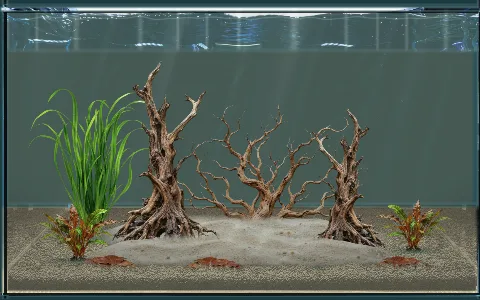 Amazon biotopeUse roots, sand and leaf litter as the structure, retaining retreats between roots. This is Amazon-inspired; the plant list does not establish a locality-accurate biotope.
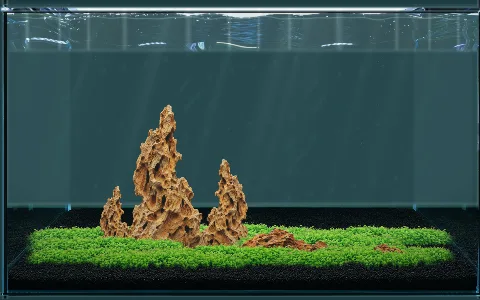 Ohko SanzonBuild an Ohko trio with one leading mass and two lower supporting masses. Let the carpet frame rather than conceal stone bases.
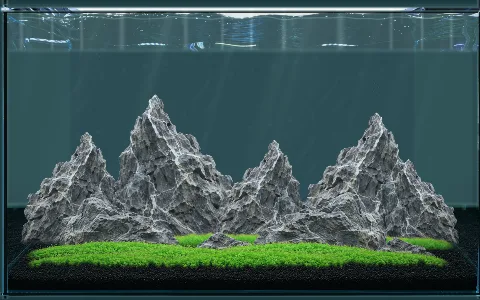 Mountain rangeSequence unequal stone peaks with breaks between masses. Guide the eye through gaps with low grass rather than levelling every summit.
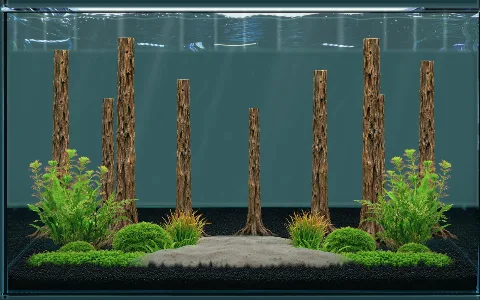 Flooded forestUse trunks for vertical structure, attached plants at their bases and sand for viewing windows. Keep wood bases accessible for cleaning.
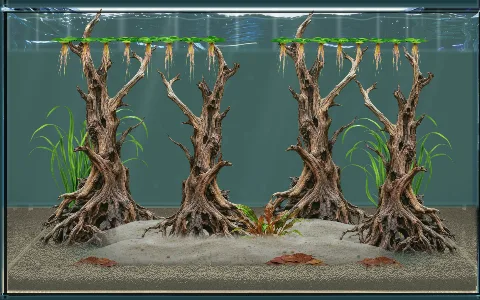 Mangrove rootsSpread roots from the back over sand, with broken shade from floaters. A mangrove-inspired silhouette does not make this planted layout a brackish recipe.
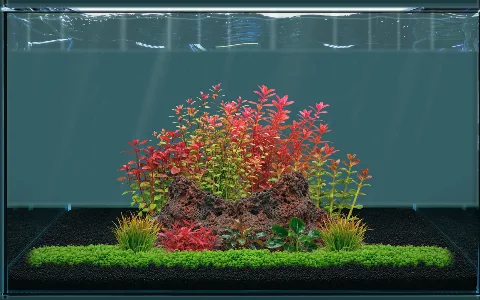 Central moundRaise planting centrally and taper toward both edges with an open base. Stagger central pruning to avoid a flat plant block.
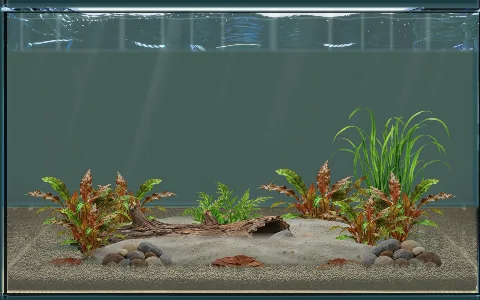 Southeast Asian streamArrange wood and pebbles as a stream bank with sand and low planting. This is Southeast Asian inspiration; check species origins for a strict biotope.
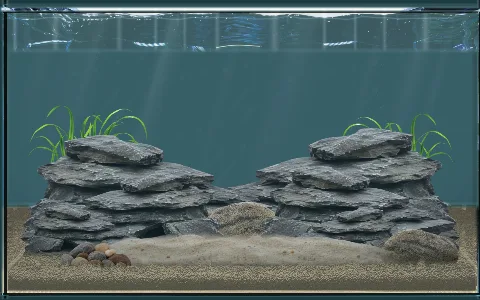 Malawi rock tankBuild firmly supported rocks with viewing gaps and cleanable sand. The Malawi name is not a stocking list: research exact cichlids and territories first.
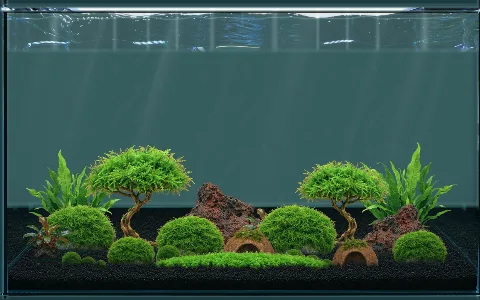 Shrimp moss gardenUse porous rock, moss and small caves for grazing surfaces. Keep moss open enough to shelter shrimplets while allowing debris removal.
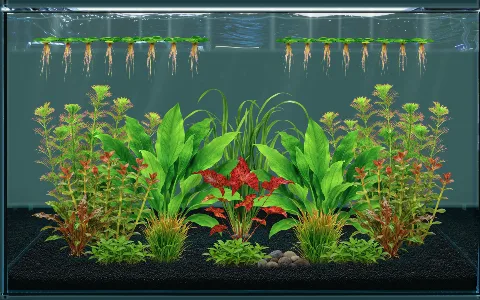 Natural WalstadCombine faster growth with rooted plants and manage floaters. The preset illustrates a composition; a soil-based Walstad system needs separate substrate, stocking and monitoring plans.
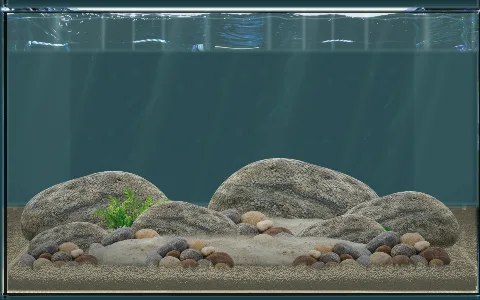 Pebble hillstreamKeep pebble masses low so water can cross grazing surfaces and open gaps. In a real hillstream tank, oxygen, temperature and biofilm are husbandry requirements rather than visual effects.
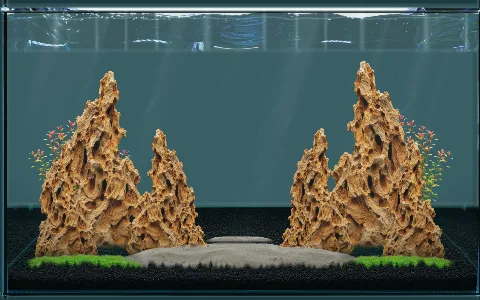 CanyonBuild unequal Ohko walls around a sand gap that widens forward. Support rocks before planting rather than relying on roots to hold walls.
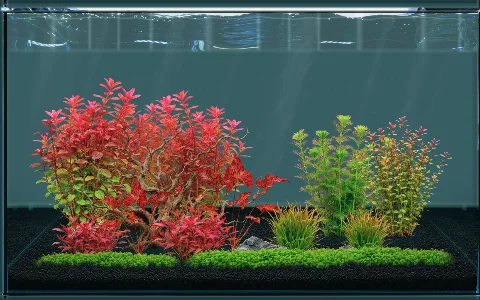 Red sunsetGroup red plants into masses separated by green pauses rather than distributing red everywhere. Stagger pruning to preserve depth.
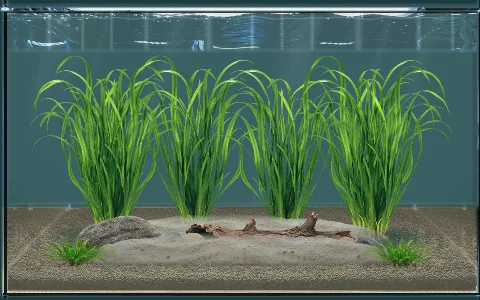 Vallisneria forestBack the log with tall Vallisneria and retain front sand. Remove selected runners before they colonise all open space.
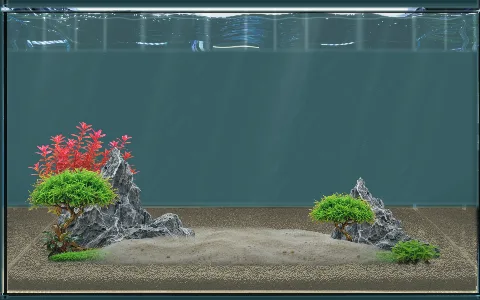 Twin islandsSeparate two unequal rock islands with a visible sand passage. Keep carpets from merging the islands into one mass.
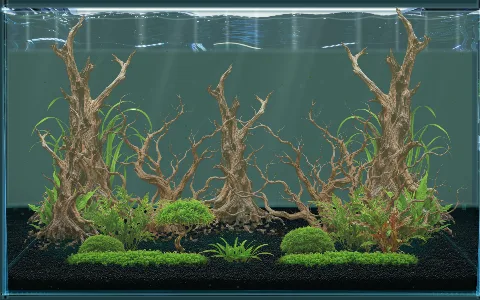 Driftwood forestLayer root structures at different depths with ferns and moss softening bases. Preserve light gaps and cleaning access.
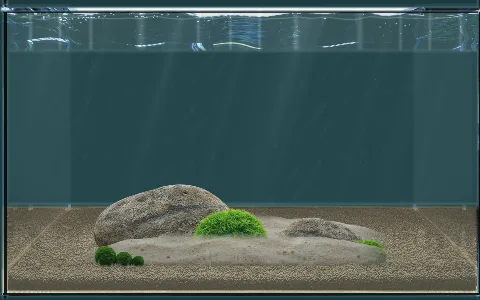 Zen gardenUse a few rock masses, sand and small green accents. Simple surfaces reveal detritus, so keep siphon access and avoid unnecessary material.
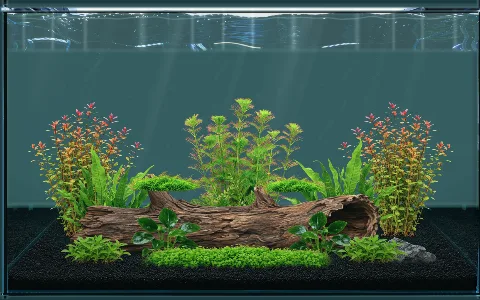 Fallen tree by a streamUse a fallen log as the main direction, attached plants at its ends and a low foreground. Inspect hollows for trapped food.
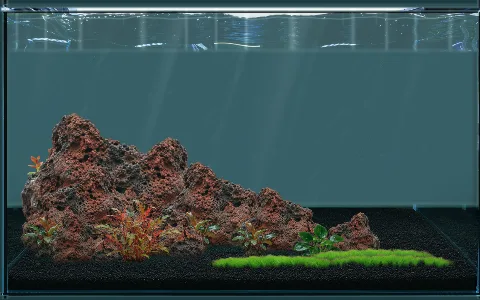 Lava rock wallBuild a stepped lava-rock bank with attached plants on ledges. Leave base circulation and avoid fish-trapping gaps.
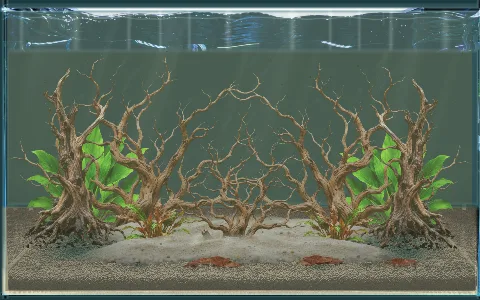 Blackwater rootsMake roots the main silhouette with simple sand and leaf litter. Monitor organic load; tea colour proves neither soft water nor medicinal effects.
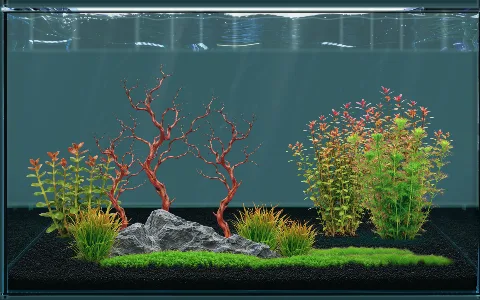 Manzanita groveSpread manzanita branches into a grove with light gaps. Plant around the bases while retaining readable branch tips.
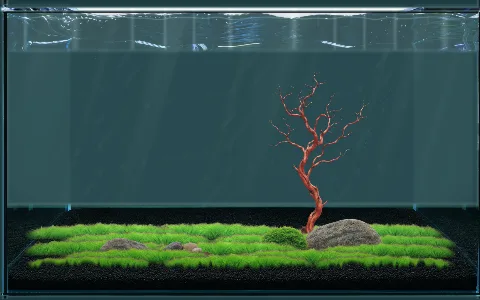 Lone-tree savannaUse one wood silhouette over an open low grass field. Keep the canopy modest and the meadow free from encroaching background stems.
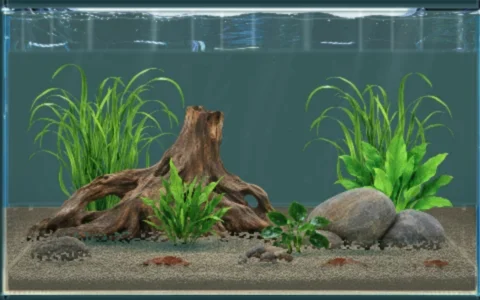 Arowana tankKeep roots and plants at the edges to preserve open central water. Real arowana housing starts with adult size, turning width and a secure lid.
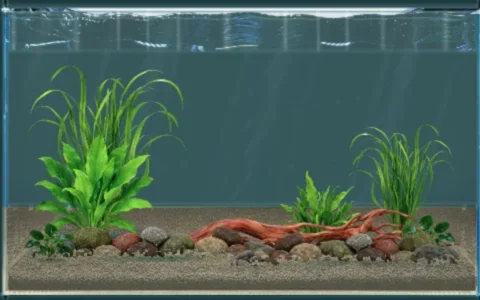 Arowana & discusUse low wood and pebbles beneath open water. The preset name does not certify safe arowana/discus mixing; assess size, predation and feeding competition separately.
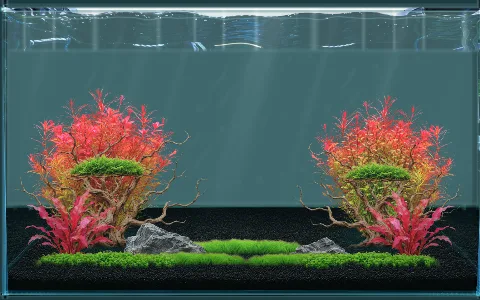 Flamingo ValleyKeep Crypt Flamingo as a pink valley-floor accent with taller red sides. Prevent stems from shading the Crypt completely.
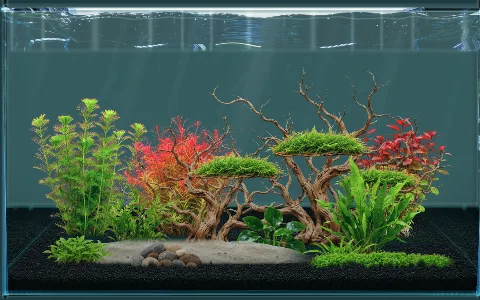 Christmas Moss CascadeAttach thin moss layers along branches to form descending tiers. Siphon clippings immediately to keep moss out of the sand.
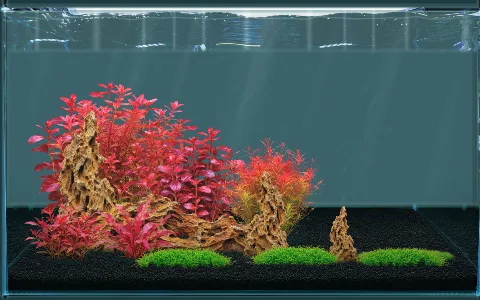 Super Red RidgeConcentrate Super Red Ludwigia along a ridge with low planting separating stone bases. Assess new growth before increasing light for colour.
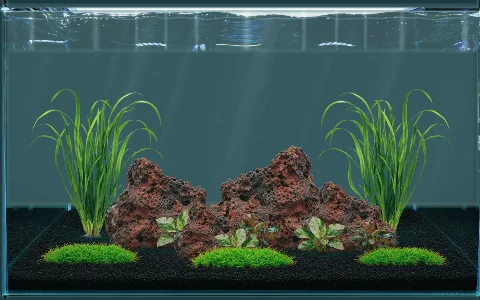 Pinto ReefUse lava rock to support Pinto Anubias and Buce with a low surrounding carpet. Retain gaps for cleaning and avoid excessive exposure on pale leaves.
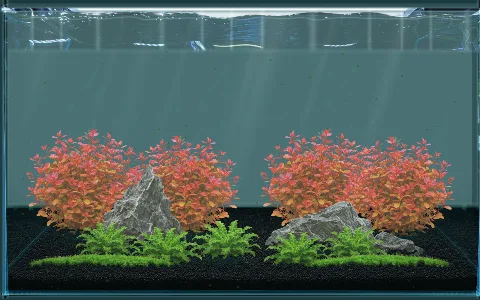 Rotala H'ra MeadowBack the stones with Rotala H’ra and retain a low front meadow. Trim stem edges before they hide the stone-to-carpet transition.
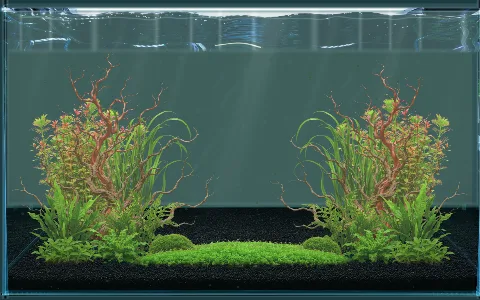 Neon Tetra GladeOpen a glade between branches and use tall plants as edging rather than blocking swimming lanes. Neon is a theme, not a stocking calculation.
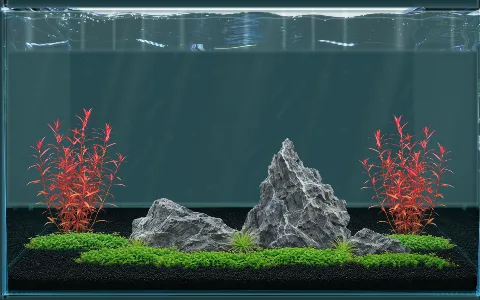 Glosso PlainLet Glosso dominate the foreground with stems confined to the back. Light must reach the substrate: a shaded carpet can lose its creeping form under a bright surface.
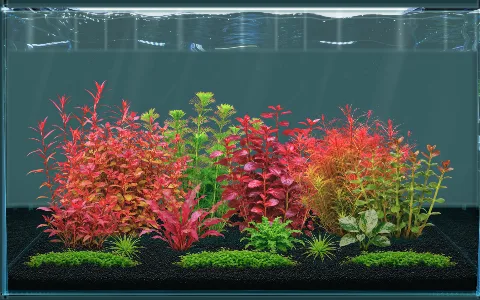 Stem StreetDefine separate stem groups around a low central street. Rotate pruning between groups to retain the street without exposing every base at once.
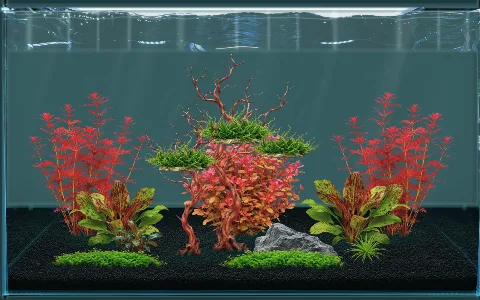 Flame Moss GroveUse upright Flame moss accents on low supports with gaps between canopies. Avoid thick initial layers that shade and trap waste below.
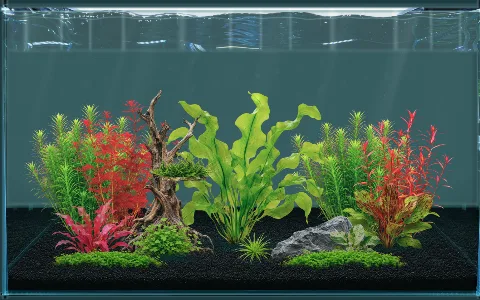 Emperor's GardenSeparate colour and leaf-form groups around the focal mass. Maintain clear edges so growth does not erase front-to-back layers.
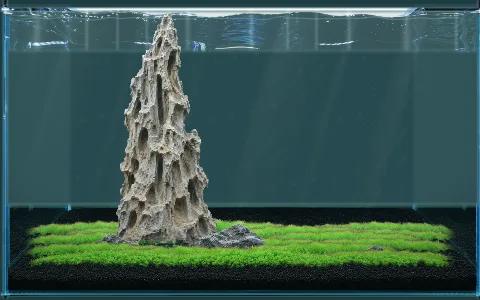 Lone stone pillarUse one tall pillar against low plants and open sand. Evaluate limestone against intended livestock GH/KH needs rather than shape alone.
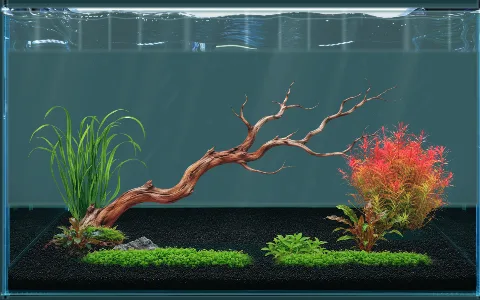 Leaning driftwoodUse diagonal wood to lead from the base into open water. Retain cleaning access below and avoid trapping gaps at the glass.
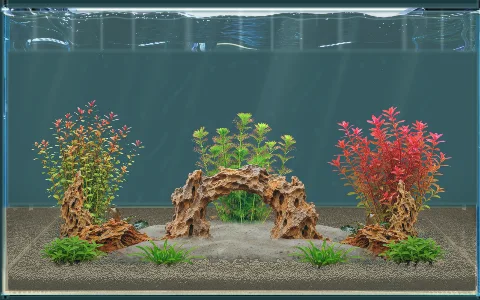 Stone gateFrame a rearward view through the arch, keeping its feet visible with low plants. Secure the arch before water and livestock are added.
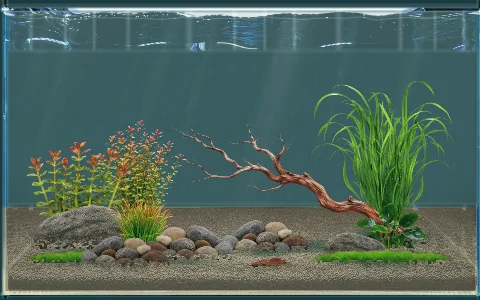 Stream bendFollow a curved bank with pebbles and a fallen branch. Preserve sand and viewing windows so large leaves do not erase the bend.
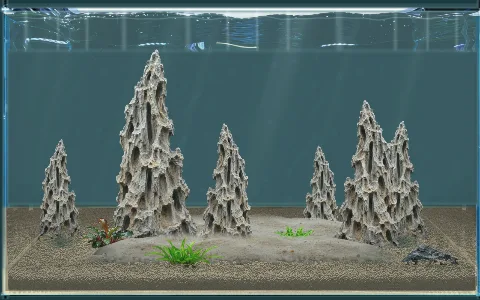 Karst bayLayer unequal pillars around a bay-like sand passage. Support each pillar independently and monitor carbonate-driven hardness changes.
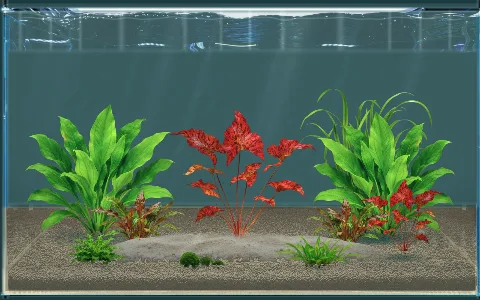 Tiger lotus pondUse tiger lotus as the main canopy with low basal planting and open surface patches. Manage floating leaves for lower plants and air-breathing fish.
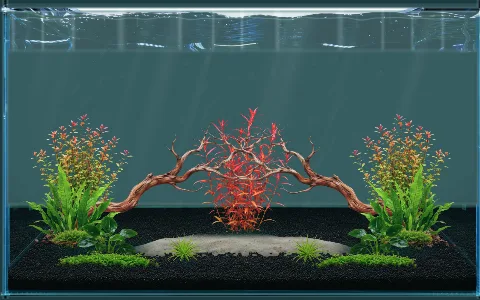 Crossed driftwoodCross two wood directions without closing the centre and use low plants to preserve the view. Avoid stressed joints that may shift as wood waterlogs.
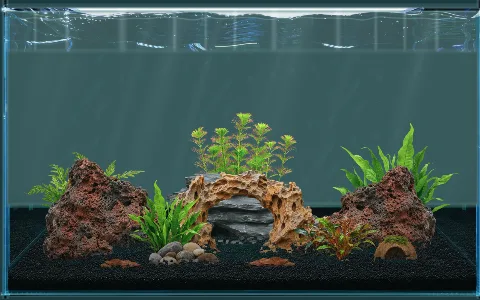 Rock caveBuild caves from stable rock masses, softening edges with attached plants. Size entrances for adults and retain interior cleaning access.
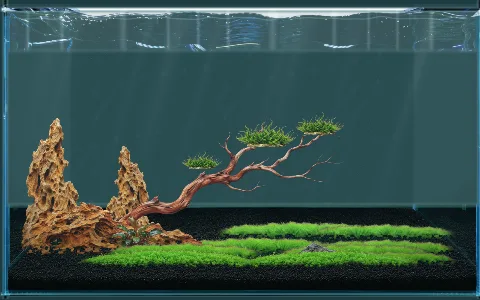 Cliff bonsaiConcentrate the cliff to one side with wood reaching over a low carpet. Trim small canopy accents rather than building one heavy green mass.
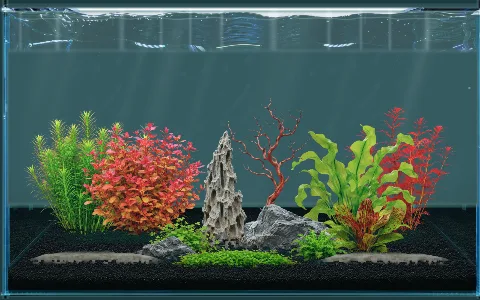 Nature moundCombine wood and stone into a low mound with sand at the edges, stems behind and a front carpet. Offset the summit for direction rather than rigid symmetry.