 Nuôi Cá
Where Flame moss comes from
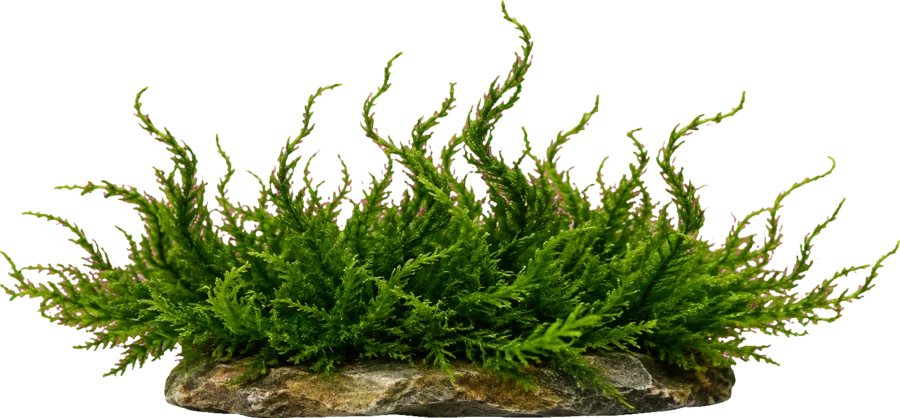
Flame moss is sold as Taxiphyllum sp. "Flame", a true moss not yet firmly identified to species and usually placed in the genus Taxiphyllum, family Hypnaceae. It appeared in the Asian aquarium trade around the mid-2000s and its wild origin is unknown. Its distinctive feature is upright stems that twist slightly and gather into pointed tufts like flames, a few centimeters tall and dark green. Like all mosses it has no true roots and clings with rhizoids.
Growing Flame moss in a planted aquarium
In a planted aquarium flame moss survives low light but keeps its flame shape best under medium light; CO2 makes it thicker and darker green. To grow it, tie or glue small tufts to wood, rock or the substrate with the tips pointing up. It grows slowly and less untidily than Java moss, so it needs less trimming; just cut back tufts that get too tall. It tolerates a wide range of water and prefers temperatures that are not too high. Debris settling at the base can bring algae, so keep a gentle flow. Easy care.
At a glance
- Scientific name
- Taxiphyllum 'Flame'
- Light
- Medium
- CO2
- Helpful
- Growth
- Slow
- Difficulty
- Easy
- Place in a layout
- Aquarium mosses
Light, CO2 and growth are typical levels; the same plant can grow differently with each tank's light, substrate and water.
In the Nuôi Cá aquarium
In the arrange tray it sits with the aquarium mosses; at its base size it is about 16 cm wide, and you can scale it, flip it and set it nearer or deeper. Moss is placed freely, usually on stone or wood, just as real moss is tied on. It opens in the tray on day 6 of your visits.
Try it in your aquarium →Sources and further reading
- GBIF — Taxiphyllum 'Flame' (scientific name, taxonomy and native range)
- OATA — freshwater aquarium care sheets (real aquarium care principles)
The "In the Nuôi Cá aquarium" part describes the 3D simulation, not real planting advice.