 Nuôi Cá
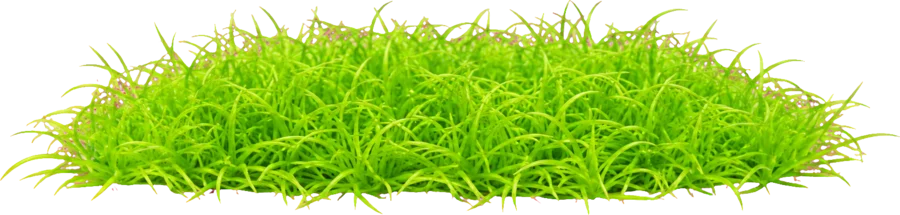
Where Utricularia graminifolia comes from
UG is Utricularia graminifolia, a carnivorous bladderwort in the family Lentibulariaceae, found in South and Southeast Asia, including India, Sri Lanka, Myanmar, Thailand and southern China. In the wild it grows on wet mud, bogs and nutrient-poor seasonal wetlands. It has no true roots; grass-like leaves 1–3 cm long rise from thin creeping stolons that also bear tiny bladder traps, which suck in microscopic organisms. Grown on land it produces small pale purple flowers.
Growing Utricularia graminifolia in a planted aquarium
In a planted aquarium UG needs strong light, plenty of CO2 and soft, clean, stable water. To plant it, split it into small portions still held in their growing medium and press them into a nutrient substrate in the foreground; many keepers use a dry start for a few weeks before flooding. Because the stolons do not anchor firmly, a thick carpet tends to lift and float, so trim it and press it back down. The traps only catch tiny plankton and do not harm adult fish or shrimp. It reacts badly to sudden changes and gets tangled with algae. A demanding plant.
At a glance
- Scientific name
- Utricularia graminifolia
- Light
- High
- CO2
- Required
- Growth
- Medium
- Difficulty
- Demanding
- Place in a layout
- Foreground and carpet plants
Light, CO2 and growth are typical levels; the same plant can grow differently with each tank's light, substrate and water.
In the Nuôi Cá aquarium
In the arrange tray it sits with the foreground and carpet plants; at its base size it is about 16 cm wide, and you can scale it, flip it and set it nearer or deeper. Its leaves sway in the current from the filter and wave maker. It opens in the tray on day 3 of your visits.
Try it in your aquarium →Sources and further reading
- GBIF — Utricularia graminifolia (scientific name, taxonomy and native range)
- OATA — freshwater aquarium care sheets (real aquarium care principles)
The "In the Nuôi Cá aquarium" part describes the 3D simulation, not real planting advice.