 Nuôi Cá
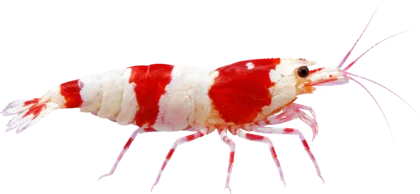
Crystal red shrimp in the wild
The bee shrimp Caridina cantonensis comes from soft, cool streams in southern China and Hong Kong. Wild animals have black-and-white bee bands; the red, blue and wine-coloured lines were selected by Japanese and Taiwanese breeders from the 1990s onwards. Like other atyid shrimp it grazes biofilm, algae and detritus; females carry the eggs and the young hatch fully formed. The first red-and-white animals were found by a Japanese breeder among black bee shrimp in the early 1990s and are now graded by how white and how patterned they are.
Keeping Crystal red shrimp in a planted aquarium
These shrimp are fussier than Neocaridina: they are usually kept in soft, slightly acidic water (pH about 5.8–6.8) at a cool 20–24 °C, on an active soil that buffers the pH, often with remineralised RO water. Small, regular water changes avoid sudden swings. A small planted tank with moss, dried catappa leaves and no predatory fish suits them best. They are for keepers who already have experience with shrimp, not for a newly set-up tank.
Water values are typical ranges; check with the seller for the exact species and line you buy, and acclimatise new animals slowly.
Classification
- Scientific name
- Caridina cantonensis
- Family
- Atyidae (atyid shrimps)
- Adult size
- 2–3 cm
- Food
- Algae, algae wafers, dried leaves
Trade names and colour lines may differ from the scientific name; many colour lines belong to one species.
In the Nuôi Cá aquarium
In the 3D aquarium the shrimp spends most of its time picking at biofilm, taking a few steps and stopping; now and then it has a busy spell, swimming up onto wood, stone, moss or a leaf to graze, and it flicks backwards when you tap the glass.
Temperament: Porcelain-like red and white bands; beautiful but needs soft, cool, clean water.
Add it to your aquarium →Sources and further reading
- GBIF — Caridina cantonensis (scientific name, taxonomy and distribution)
- OATA — freshwater aquarium care sheets (real aquarium care principles)
The "In the Nuôi Cá aquarium" part describes the 3D simulation; its stocking limits are not real-world care instructions.