 Nuôi Cá
Where Blyxa comes from
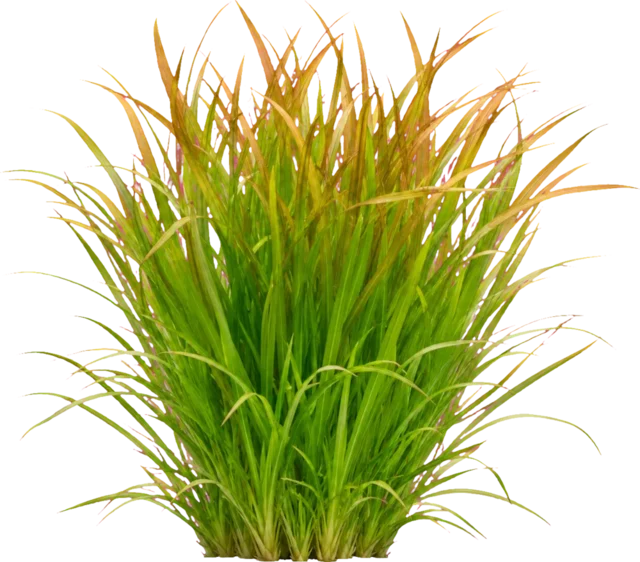
Blyxa japonica belongs to the frogbit family (Hydrocharitaceae) and ranges widely across Asia, from Japan and China through Southeast Asia to India and Nepal, typically in rice paddies, ditches and shallow ponds. In the wild it is often an annual that lives with the flooding of the fields. It has a short upright stem and narrow strap-like leaves about 3 to 8 cm long in dense rosettes, the clump usually 5 to 10 cm tall; the stem keeps budding side shoots, so clumps thicken over time. Under strong light and lean nutrients the leaf tips turn bronze to reddish brown.
Growing Blyxa in a planted aquarium
In a planted aquarium Blyxa japonica needs strong light, steady CO2 and a rich substrate; without CO2, or in hard water, it stunts, its leaves curl and it slowly melts. It grows at a moderate pace and suits the front midground and midground, especially as a soft band around the base of stones. How to grow it: plant small clumps just deep enough to hold, a few centimeters apart; digging fish and snails can uproot them before they root. When a clump gets dense, lift it and divide the side shoots for replanting, since it is not trimmed like a stem plant. It prefers soft, slightly acidic water, dislikes being moved or sudden changes, and is of medium difficulty.
At a glance
- Scientific name
- Blyxa japonica
- Light
- High
- CO2
- Required
- Growth
- Medium
- Difficulty
- Moderate
- Place in a layout
- Midground plants
Light, CO2 and growth are typical levels; the same plant can grow differently with each tank's light, substrate and water.
In the Nuôi Cá aquarium
In the arrange tray it sits with the midground plants; at its base size it is about 11 cm tall, and you can scale it, flip it and set it nearer or deeper. Its leaves sway in the current from the filter and wave maker. Under the tank light it pearls small oxygen bubbles.
Try it in your aquarium →Sources and further reading
- GBIF — Blyxa japonica (scientific name, taxonomy and native range)
- OATA — freshwater aquarium care sheets (real aquarium care principles)
The "In the Nuôi Cá aquarium" part describes the 3D simulation, not real planting advice.